
Inside a 6-Step LED Quality Control Process
Walk a real LED quality control process gate by gate: incoming QC, AOI, integrating sphere, aging, IP testing and pre-ship control, with the records to demand.
A QC report that says "100% tested, all passed" tells you almost nothing. It does not say what was tested, on which batch, against which limit, or what the measured value was. For a buyer placing a 5,000-piece order on a facade or a touring rig, that sentence is the difference between a predictable project and a re-run.
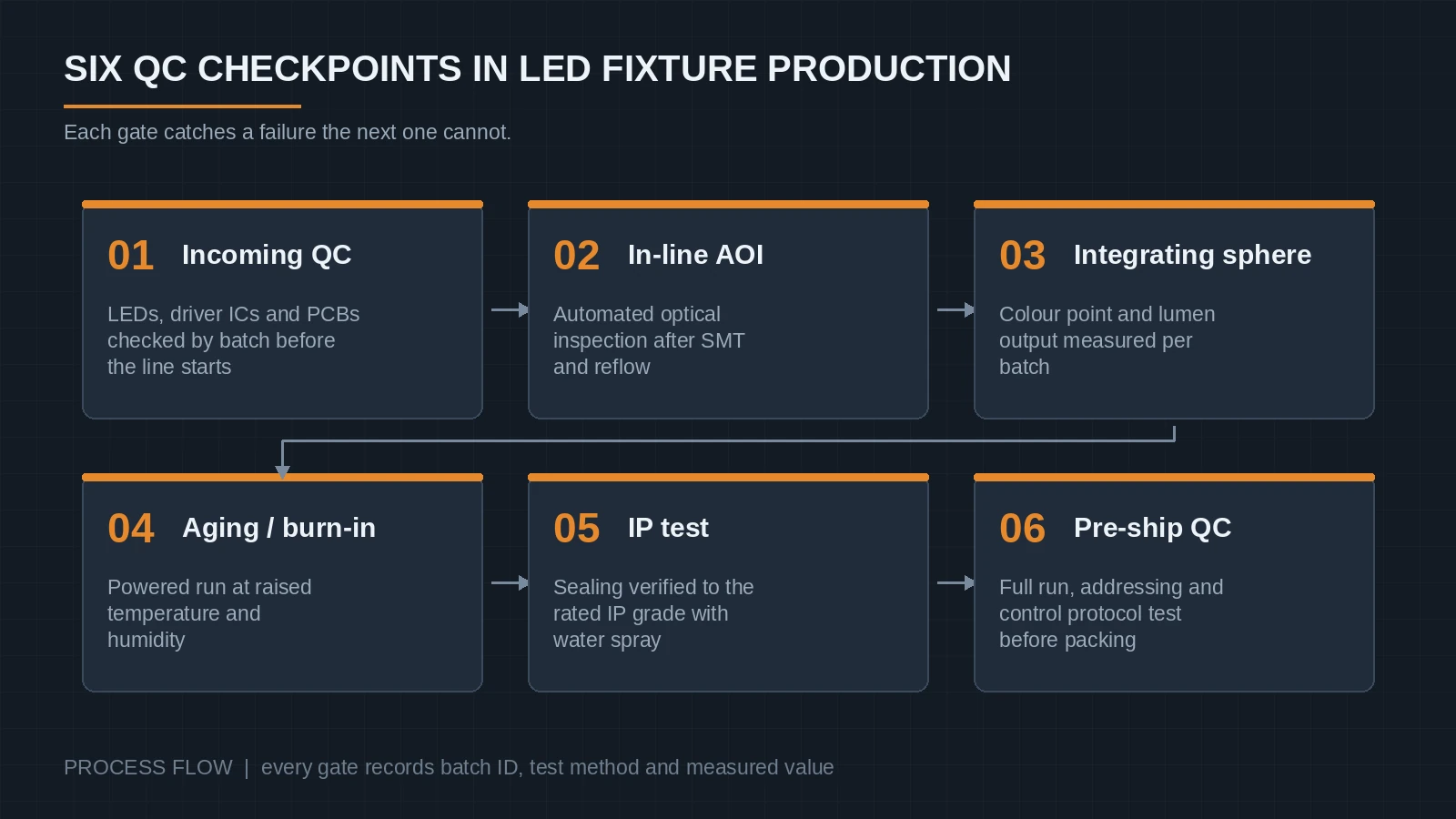
LED quality control is not a single inspection at the end of the line. In a factory that builds addressable fixtures, it is a sequence of gates, each one catching a failure that the next gate physically cannot see. This walkthrough covers the six gates in order — what each one tests, which failure it removes, and what evidence to ask for before you approve a batch. The same six gates double as an audit checklist for a supplier you have not worked with before, which is why they sit inside the wider certification and export compliance picture.
Why a Final Check Cannot Prove LED Quality
Most LED failures are seeded early and surface late. A cold solder joint on a driver IC's data line passes a bench test at 22°C, ships, and fails in week six when the fixture has been running at 45°C inside an aluminium profile. A batch of LEDs from a different bin passes a visual check and then reads as a slightly different white next to the previous batch on the same wall.
By the time product reaches final inspection, the only defects left to catch are the obvious ones. Everything expensive has already happened.
Defect | Visible at final packing check | Gate that actually catches it |
|---|---|---|
Mixed LED bins from a broker | No | Incoming QC |
Bridged or cold solder joint | Rarely | In-line AOI |
Colour drift between batches | No | Integrating sphere test |
Early field failure (infant mortality) | No | Aging / burn-in |
Seal that fails after a month outdoors | No | IP test |
Address conflict or dead pixel at the end of a run | No | Pre-ship control test |
A second distinction matters just as much. Certification and quality control answer different questions. A CE declaration or a RoHS report describes a design that was tested once, in a lab. A batch record describes what the units in your carton actually did. Buyers who treat a certificate as a QC report are relying on a document that was never intended to carry that weight, a confusion covered in more depth in the guide to verifying an LED certificate number.
Step 1: Incoming QC on Every Component Batch
The first gate happens before anything is assembled, and it is also the first one to be quietly dropped, because it costs money without producing a unit.
What gets checked:
- LED packages — bin code, forward voltage, colour coordinates, and whether the reel label matches the bag label.
- Driver ICs — the actual part number (WS2811, WS2812B, SK6812, UCS1903 and so on), marking verification, and a sample run on a test jig.
- PCB — copper thickness, solder mask integrity, panel flatness, and hole registration on the pads that carry the data line.
- Cable, connectors and power supplies — conductor gauge against the rated current, connector retention force, and PSU nameplate against the load calculation.
The failure this gate removes is the cheapest to fix and the most expensive to miss: a mixed or counterfeit component batch. A broker reel with two bins mixed together will produce a strip that looks perfect on the bench and shows a colour break at pixel 340 on site.
Ask for the incoming inspection record with the lot number, the sample size used, and the accept/reject result. If a supplier cannot produce a lot number that traces to your order, the rest of their QC claims become unverifiable.
Step 2: In-Line AOI During SMT and Reflow
Automated optical inspection is a camera system that compares every board against a golden reference: paste volume, component presence and rotation, solder fillet shape, bridging between adjacent pads. It runs after paste printing, after placement, and again after reflow.
On a pixel strip the AOI matters more than on a plain luminaire, because the boards are dense and the failure modes are small. A single bridged data pad can take out a 60-pixel segment; a tombstoned capacitor can pass a continuity test and fail under thermal cycling.
Three things separate a real AOI step from a checkbox:
- It runs after reflow, not only after placement. Reflow is where most solder defects are created.
- The reject rate is recorded per batch. A line reporting 0.00% rejects month after month is worth questioning — either nothing is being caught, or nothing is being written down.
- Rework is logged. Boards that were reworked are the ones most likely to fail later, and the log is how you know how many are in your order.
A functional board test usually follows AOI: power the panel, check current draw, and drive a test pattern to confirm the ICs respond. That test catches electrical faults but not marginal joints, which is why it does not replace the next three gates.
Step 3: Integrating Sphere Test for Colour and Lumens
An integrating sphere is a hollow, internally coated sphere that collects all the light a fixture emits, so a spectrometer can measure total flux, chromaticity, correlated colour temperature and colour rendering without depending on beam angle. It is the standard way to state what a batch delivers in lumens and watts rather than in adjectives.
What it catches: batch-to-batch colour shift, flux shortfall against the datasheet, and voltage-bin mismatch that would make one segment brighter than the next on a long run.
For architectural and stage work, chromaticity is the number that matters. Specifications usually express colour tolerance as Δu′v′ in the CIE 1976 UCS diagram, but the limit a supplier quotes is a purchasing convention rather than a fixed industry value: it is agreed per project, and it only means anything when the same limit has been applied to every batch. Two batches each inside their own datasheet can still read as two different whites when installed side by side — which is exactly why per-batch measurement, and not a one-off type test, is the requirement. The mechanics of binning and how tight a tolerance is realistic are covered in LED colour consistency and binning.
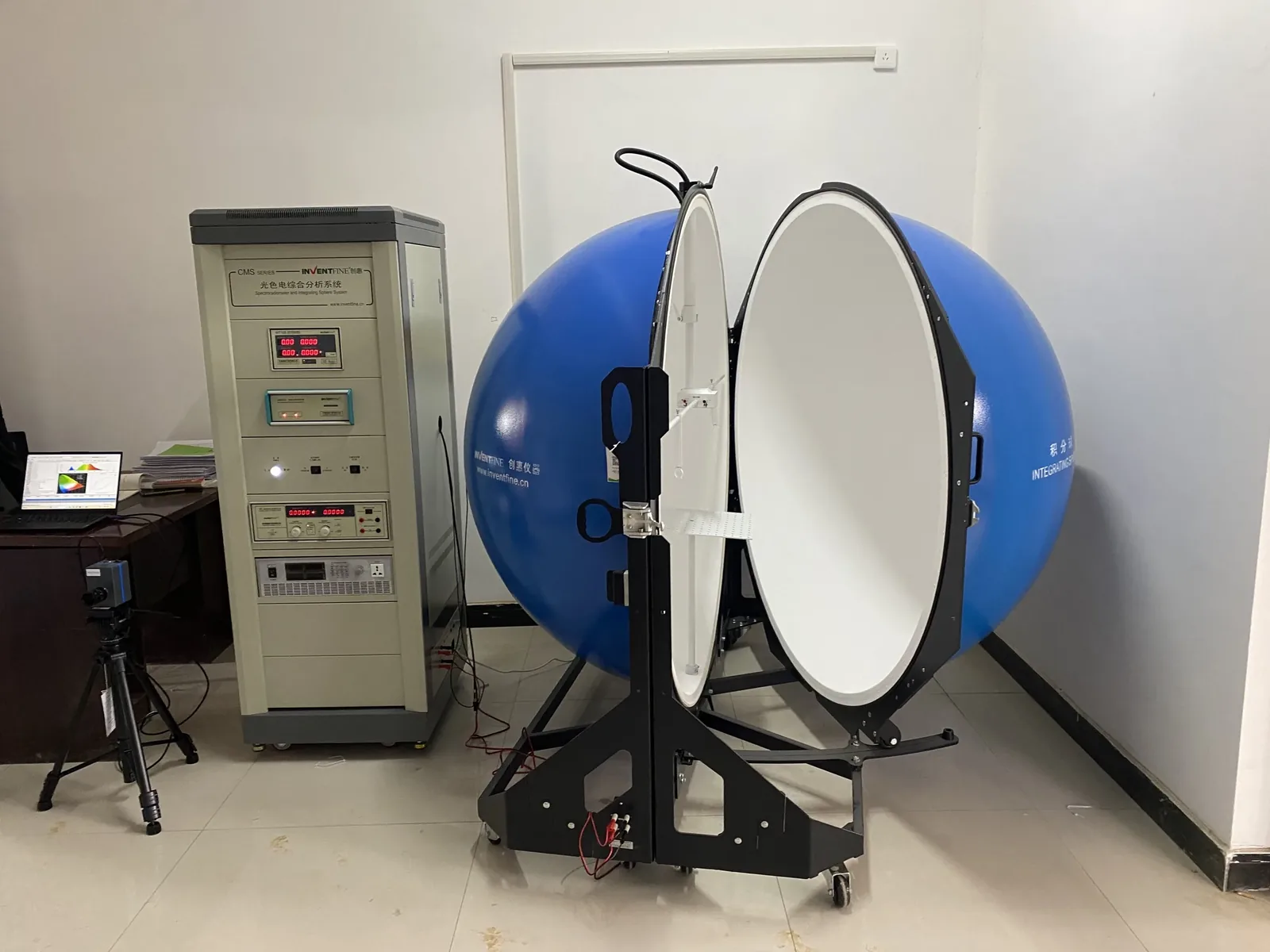
What to request: the sphere reading per batch with the batch ID, the drive current and stabilisation time used, and the bin code printed on the reel labels in your shipment. If those three do not agree, the measurement belongs to a different production run than your order.
Step 4: Aging and Burn-In at Raised Temperature
Aging is a screen, not a lifetime test. The fixture runs powered for a defined period at raised temperature and humidity, and the units that were going to fail early fail there instead of in your installation. The industry pattern behind it is infant mortality: a small share of units fail in the first tens of hours, the failure rate then drops to near zero for years, and rises again at end of life. Aging attacks the first part of that curve.
The conditions determine whether the screen means anything. Four parameters have to be stated together:
- Temperature — a chamber at 25°C screens almost nothing; the point is to push the junction above what the site will see.
- Humidity — relevant for outdoor and facade product, where moisture ingress is the dominant failure path.
- Drive current — aging at half the rated current is a different test from aging at full load.
- Duration and coverage — 100% burn-in of every unit, or a sample per batch. Both are legitimate; the choice has to be written down.
Post-aging retest is where the value sits. A unit that survives 48 hours but has dropped 8% of its flux or shifted colour has told you something a pass/fail stamp hides. Ask for the before/after flux reading on the sample, not just the failure count.
Long-term behaviour is a separate question, answered by lumen maintenance testing under IES LM-80 (LED packages and modules) or IES LM-84 (luminaire level) rather than by any burn-in the factory runs. Photometric measurement of a complete product is covered by IES LM-79.
Step 5: IP and Waterproof Testing to the Rated Grade
An IP rating is two numbers, and they are tested separately. The first digit covers solids (dust, tools, fingers), the second covers water. IEC 60529 defines the test for each digit, and the official IEC publication is the only version worth quoting in a specification.
The water digits that come up most in LED work:
Rating | Test | Where it is used |
|---|---|---|
IPX5 | Water jet, 6.3 mm nozzle, 12.5 L/min, at least 3 minutes | Washdown, some outdoor signage |
IPX6 | Powerful water jet, 12.5 mm nozzle, 100 L/min, at least 3 minutes | Facades, exposed coastal sites |
IPX7 | Temporary immersion, 1 m for 30 minutes | Fixtures that can sit in standing water |
IPX8 | Continuous immersion, depth and duration agreed between buyer and maker | Fountains, pools, mine sumps |
The test is only meaningful on the exact construction you are buying. A moulded sample with a glued end cap passes IP68; the same product with a different gland, a shorter cable tail, or a silicone extrusion from a second supplier may not. Ask which construction was tested, and whether the report covers the cable entry — the most common leak path on a strip.
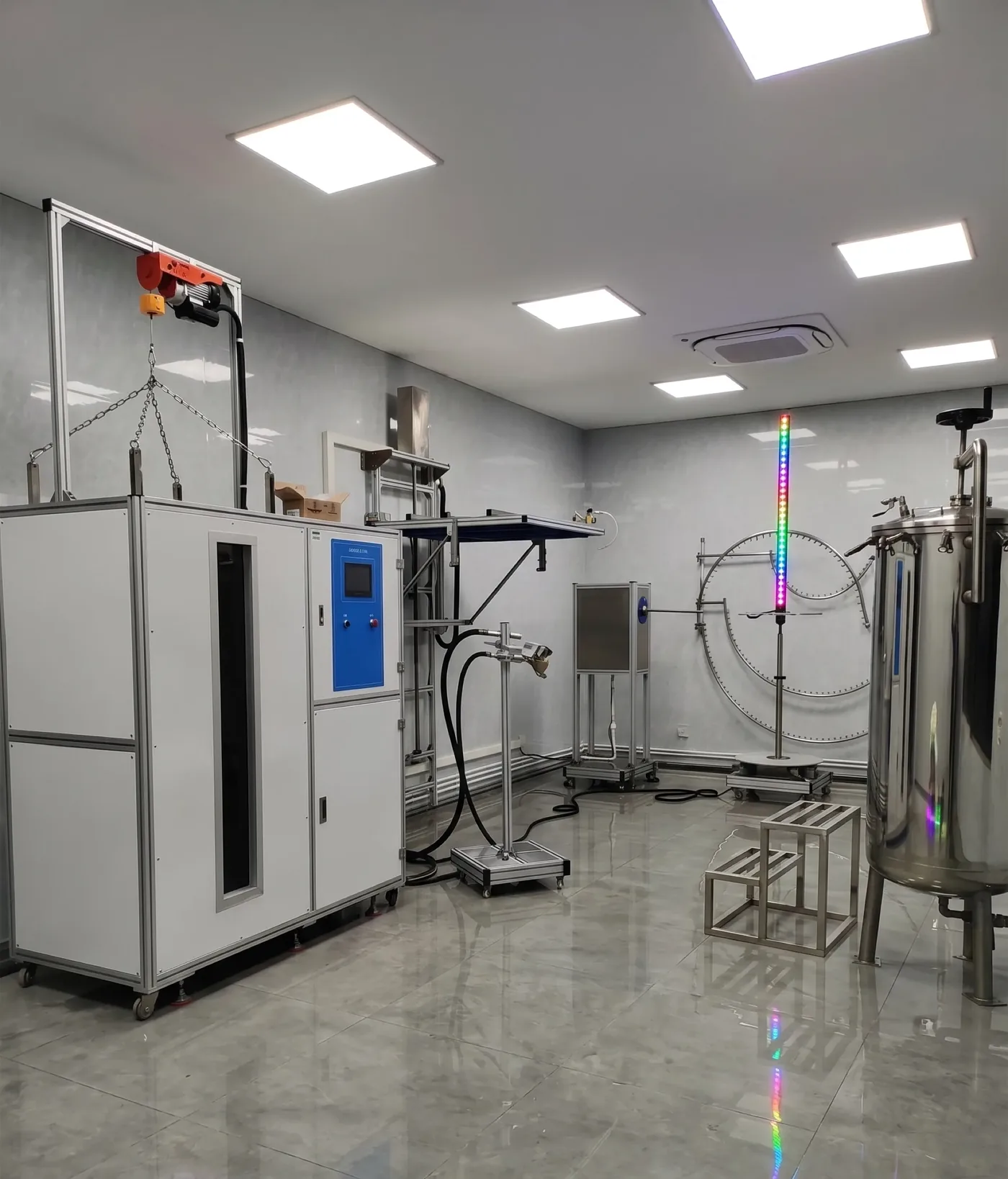
After the water test, look for two follow-up readings: a visual check for internal moisture and an insulation resistance measurement. A fixture that still lights after the spray but has water inside the profile will fail within months. The differences between the common outdoor grades, and which one a given installation actually needs, are set out in IP65 vs IP67.
Step 6: Pre-Ship Control Test on the Whole Run
The last gate is the one that separates addressable LED quality control from ordinary luminaire QC, because a pixel fixture has a control layer as well as a light layer.
Three tests belong here:
- Full-run power test. Every unit powered at rated voltage, or a defined sample per batch with the rule and the acceptance number written down — the same choice Step 4 describes for aging, and legitimate either way as long as it is stated. This is the cheapest way to catch a dead segment before it reaches a carton.
- Protocol test on the real controller. Drive the run through Art-Net, DMX512 or SPI exactly as the site will, using the controller model specified, and confirm every universe and every output responds.
- Addressing verification. Each pixel's address is written and then read back. Address conflicts are invisible on a single fixture and fatal on a 3,000-point installation, and they only appear when the whole run is on the same data line.
Length is part of the test. Voltage drop along a 48 V or 24 V run shifts colour at the far end, and a 2-metre sample will never show it. The run has to be tested at the length you are shipping, with the cable gauge you are shipping.
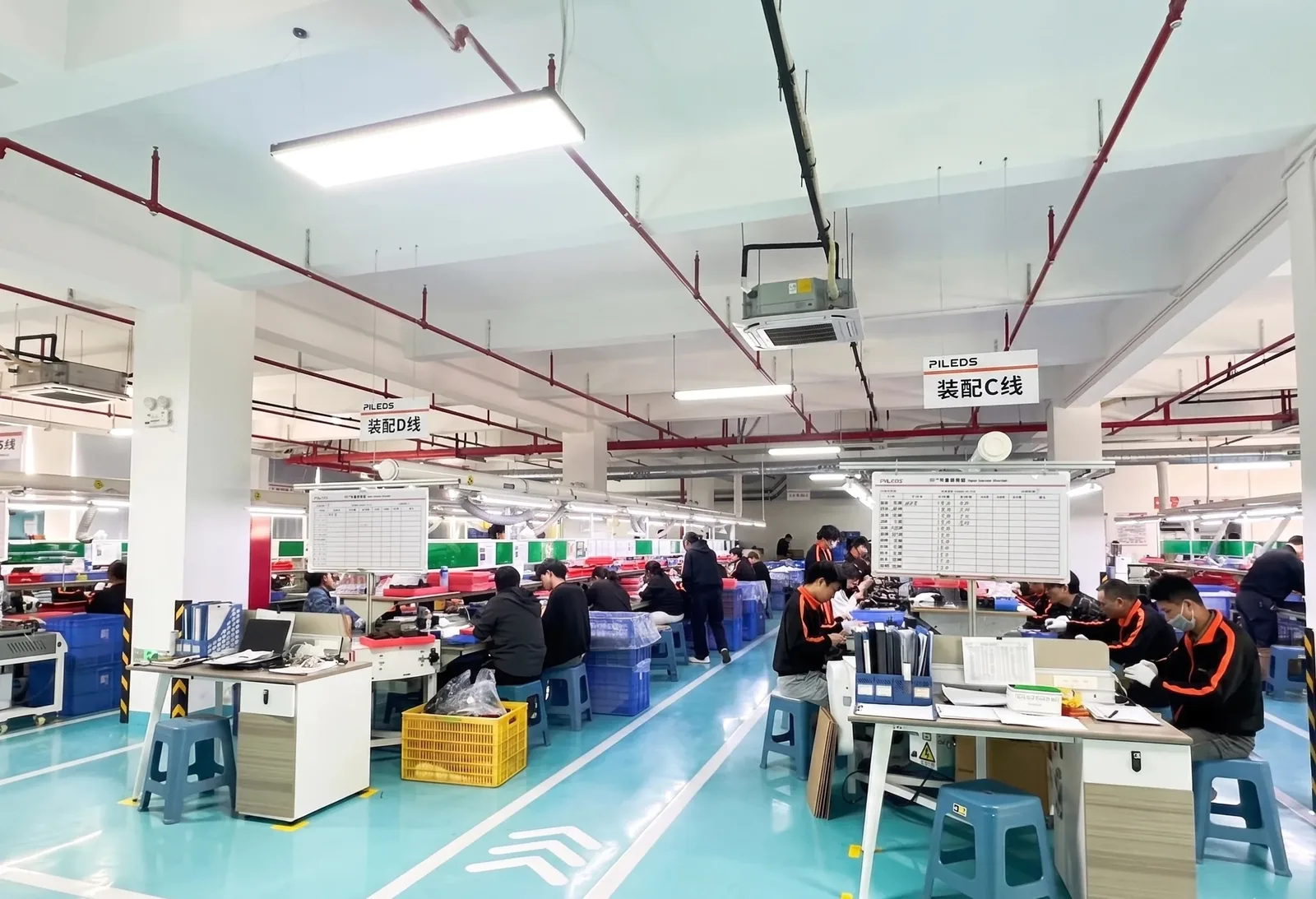
What to request: the test log with controller model, protocol, pixel count per output, and the pass criteria used. A log that only says "tested OK" cannot tell you whether the far end of the run was checked at all.
What a QC Record Should Contain for Each Batch
A gate that leaves no record is a claim, not a control. Five fields make a record auditable, and they cost a supplier nothing to produce if the gate genuinely runs:
- Batch and lot ID plus the production date — so the record ties to the carton in front of you.
- The test and the method — "colour test" is not a method; "integrating sphere, chromaticity at rated current, Δu′v′ vs golden sample" is.
- Measured value against the limit — the actual reading next to the limit it was compared against, not "pass".
- Sample size and sampling rule — 100%, or a defined sample per batch with the acceptance number stated.
- Operator and equipment calibration date — the sphere and the chamber drift, and a reading from an uncalibrated instrument is decoration.
If a supplier can give you this for the batch behind your samples, the QC is real. If they can only give you a certificate and a photo of a machine, you have learned what you needed to know about them — a subject worth pursuing in the broader supplier vetting checklist.
Which Checkpoints to Write Into Your Purchase Order
QC you cannot require is QC you will not get on a repeat order. These clauses are short enough to sit in a PO annex, and each one maps to a gate that produces evidence.
Clause | What to write | Gate protected |
|---|---|---|
Component traceability | Lot/batch number per reel and per PCB panel, no mixed bins | Incoming QC |
Colour tolerance | Δu′v′ limit written as a number against the approved golden sample, measured per batch, the same limit for every batch | Integrating sphere |
Aging | Stated temperature, humidity, drive current and duration; retest readings supplied | Aging / burn-in |
Ingress protection | Test report for the exact construction and cable entry supplied | IP test |
Control test | Full run tested on the specified controller and protocol, addressing verified | Pre-ship QC |
Documentation | Certificate numbers verifiable with the issuing body | Compliance |
The last row is the one buyers underestimate. A certificate number that cannot be checked against the issuing body's database is worth nothing in a dispute, and checking one takes minutes.
What Factory QC Cannot Cover
Honest scoping matters here, because a supplier who promises that their QC guarantees a site is either misinformed or overselling.
Factory QC stops at the door. It cannot see:
- Voltage drop on the installed run — a design and cable-gauge problem, not a manufacturing defect.
- Power supply sizing and derating — a 350 W PSU asked to carry 340 W has no headroom left, and in a warm cabinet that load margin decides the service life of the whole run.
- Ambient temperature inside an aluminium profile — a fixture rated for 45°C ambient can be running at 70°C inside a closed channel.
- Installation errors — a connector mated with grit in the seal, a cable gland tightened onto the jacket instead of the conductor, a DMX line terminated wrong.
- Network and control configuration — Art-Net universe mapping and IP addressing live on the site side.
The practical implication: use the factory's records to rule out manufacturing causes, and use a commissioning checklist to rule out site causes. If a fault appears after install, knowing which side of that line it sits on is what turns a blame conversation into a fix. A pre-power-on sequence that covers the site half is worth running on every project.
Quick Answers on LED Quality Control
How many QC checkpoints should an LED supplier have? At least six for a fixture with a control layer: incoming components, in-line inspection, photometric measurement, aging, ingress protection, and a full-run pre-ship test. Fewer than four usually means the checks happen only at packing.
Is a CE or RoHS certificate proof of quality? No. Those documents describe a design assessed to a standard, and in the EU the applicable directives are the Low Voltage Directive for electrical safety and the RoHS Directive for restricted substances. Neither reports what a specific batch of units measured. In North America the equivalent safety question sits with UL 1598 for luminaires, again a type test rather than a batch record.
How long should LED aging run? The duration is meaningless without the temperature, humidity and drive current next to it. A four-hour run at half current screens almost nothing; a 48-hour run at elevated temperature and full load on 100% of units is a real screen. Ask for the four parameters together, never the hour count alone.
Can a buyer audit QC remotely? Partly. Batch records, dated photos or video at each gate, and the raw measurement data can be reviewed remotely. Certificate numbers can be checked independently with the issuing body. What cannot be done remotely is confirming that the record belongs to your carton — that requires traceability from lot number to shipment, which is why the traceability clause sits first in the table above.
Your Next Step
Take one supplier — current or prospective — and ask for a single batch record covering all six gates. Most will send a certificate and a general brochure. The ones who send measured values, sample sizes and calibration dates are the ones worth a second order.
The six gates are the same ones Pileds runs at its plant in Shenzhen Bao'an, so the record worth checking against is the one behind the batch your samples came from, not a generic quality statement. If you want to see what a complete record looks like before you ask anyone else for one, request the QC file for a sample batch.
Specifying pixel LED for a real project?
Send the spec — pitch, IC, IP class, run length, voltage — and you get an engineer's answer, not a catalogue. Samples and OEM/ODM quotes from the Shenzhen factory floor.