
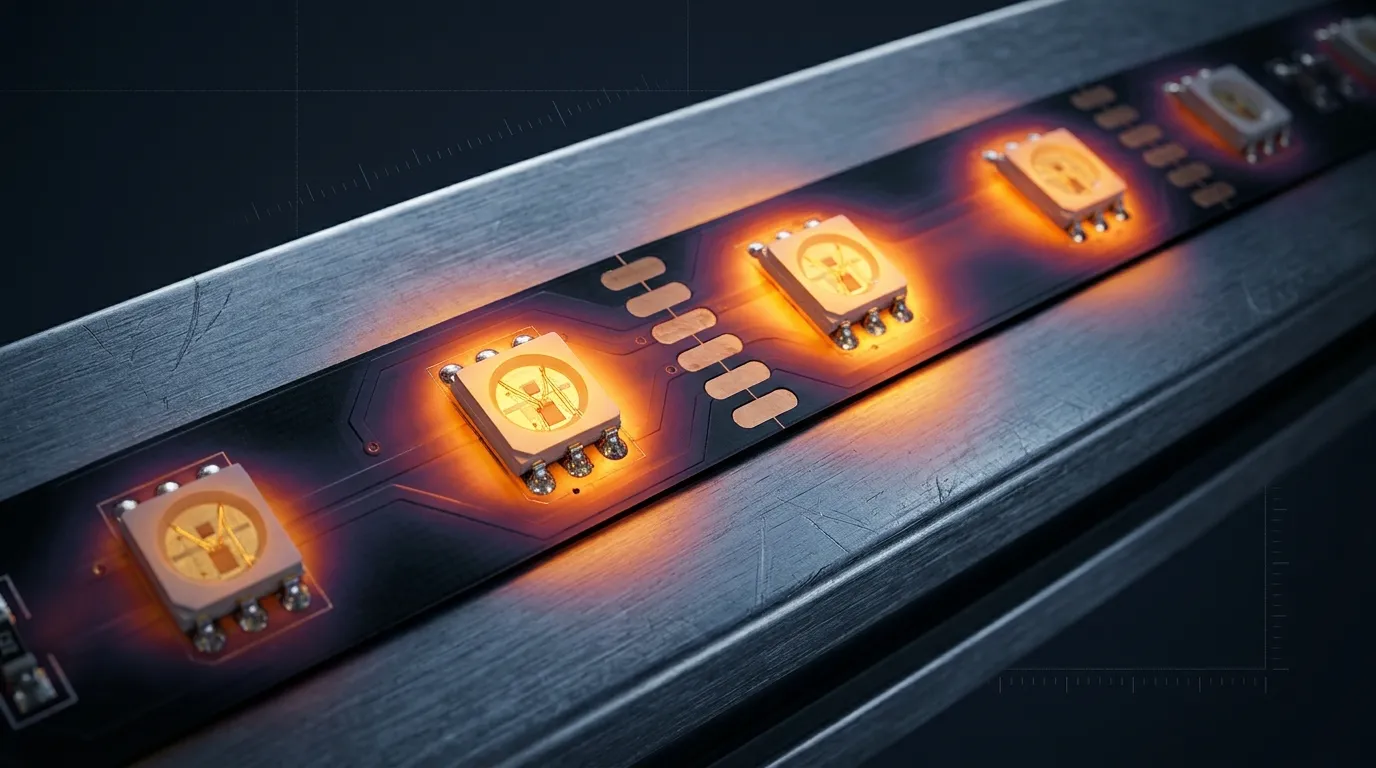
LED Strip Operating Temperature: Ta, Tc or Tj?
Most LED strip datasheets quote a single operating temperature without saying which node it measures. Here is how to read Ta, Tc and Tj and compare fairly.
What IP20 through IP68 actually survive outdoors, how sealing is really done, and what evidence a lighting handover needs.
Most LED strip datasheets quote a single operating temperature without saying which node it measures. Here is how to read Ta, Tc and Tj and compare fairly.
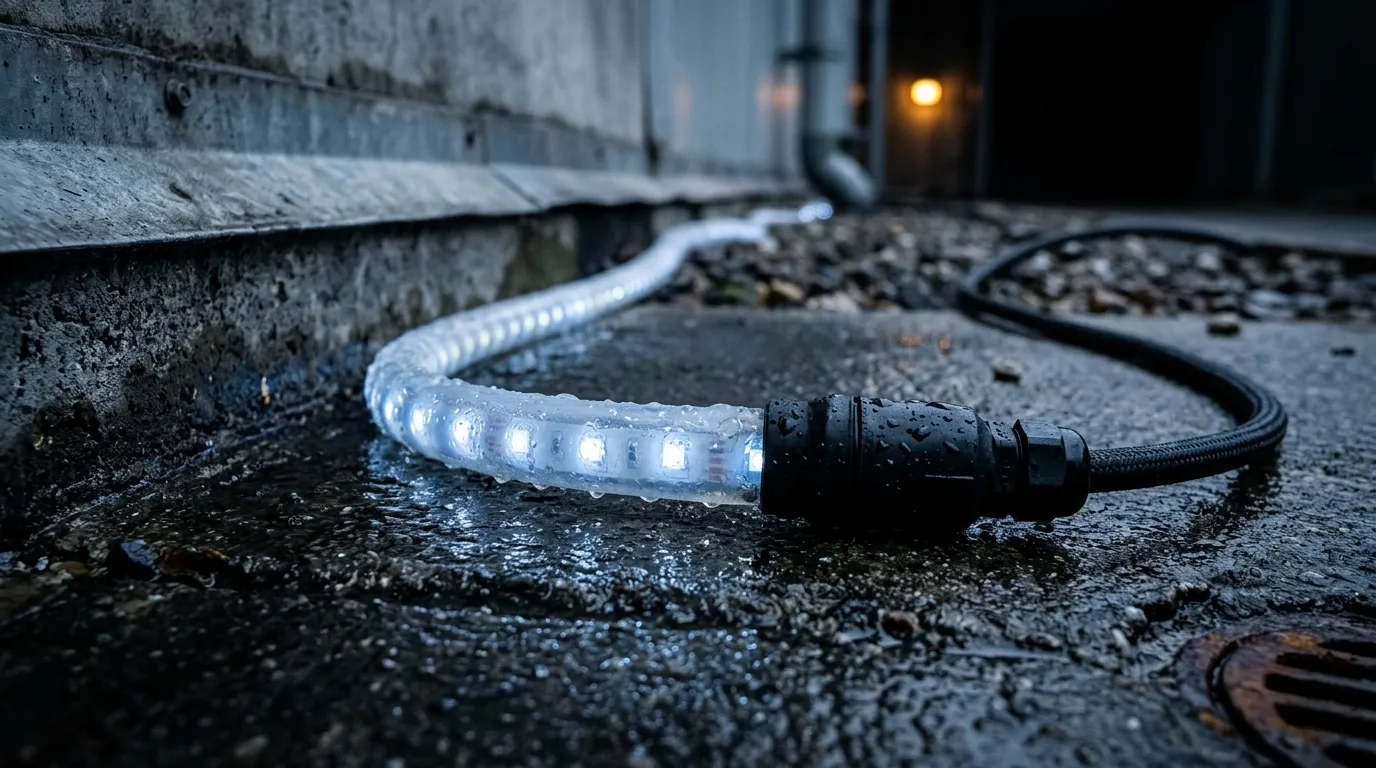
A cut joint is where the IP67 rating ends. The methods that restore it, the sealant that will not corrode copper, and the immersion test that proves it holds.
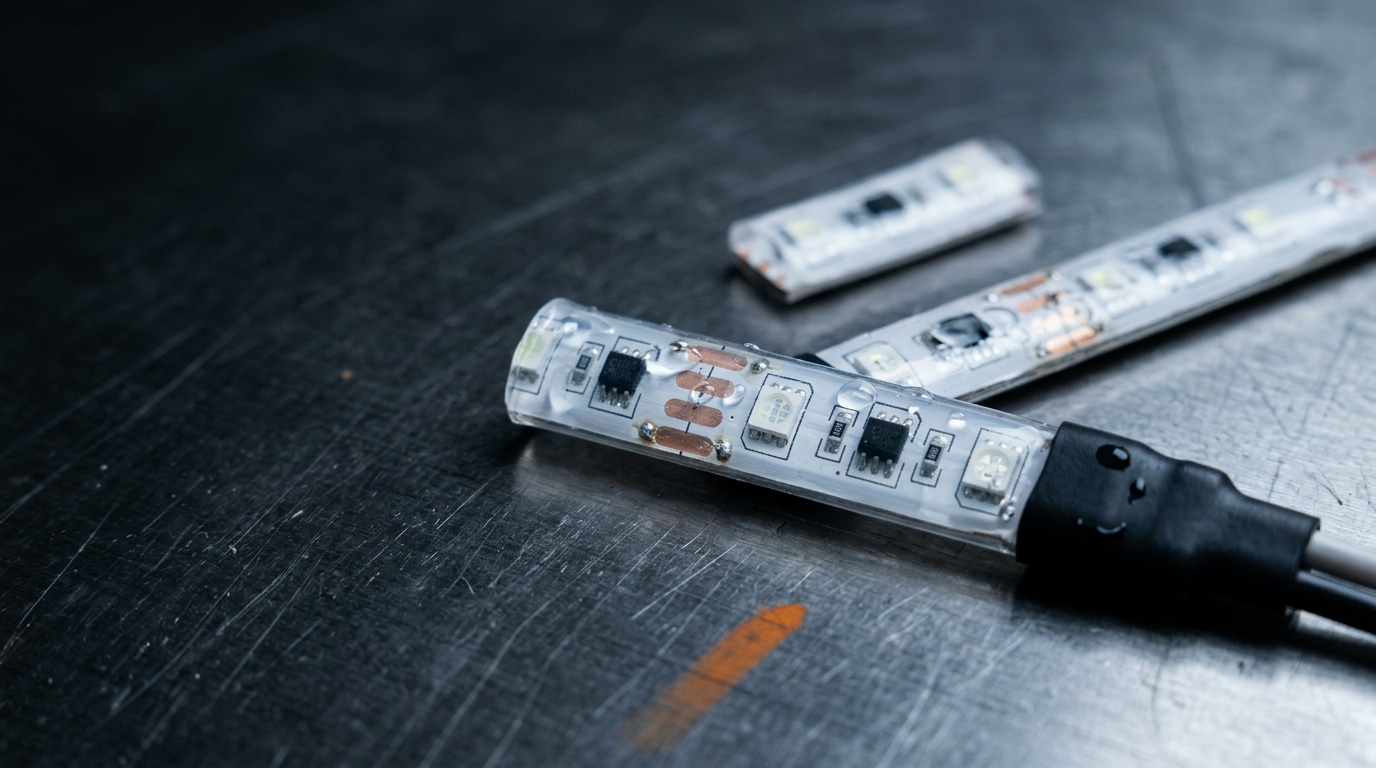
How an outdoor LED strip's waterproofing is built and kept: potting vs silicone sealing, sealed end caps, mated connectors, and what survives a field repair.
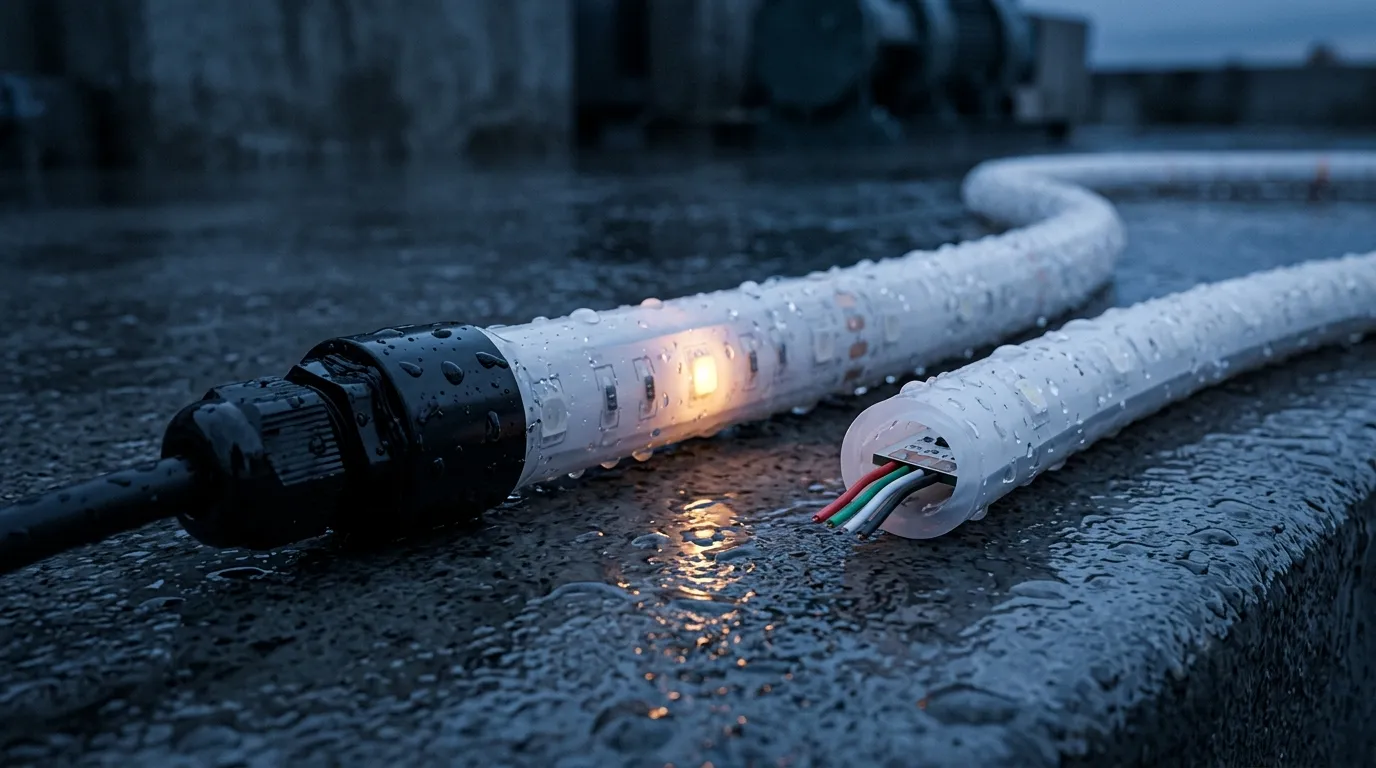
IP67 waterproof vs IP68 compared honestly: what each test really proves, why the higher rating is not always the better buy, and how to pick the right grade.
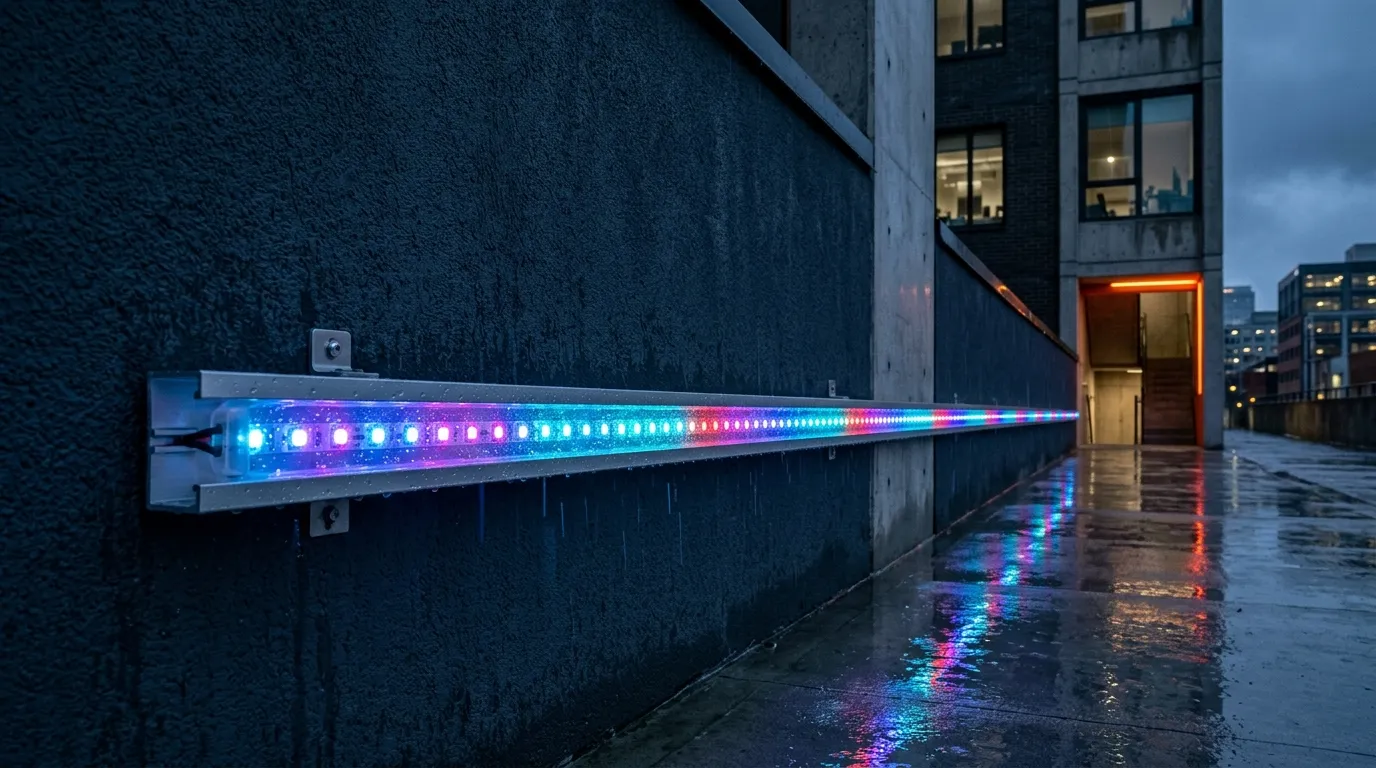
IP30 vs IP65 vs IP68 explained: what the digits mean, how each grade is built, and which waterproof LED strip rating fits your indoor or outdoor pixel project.

IP65 resists low-pressure jets; IP67 survives 1 m immersion for 30 minutes; IP68 handles continuous submersion. What each rating means for outdoor LED strips.
Send the spec — pitch, IC, IP class, run length, voltage — and you get an engineer's answer, not a catalogue. Samples and OEM/ODM quotes from the Shenzhen factory floor.