
UL Certified vs UL Listed: What It Means
UL Certified vs UL Listed are not the same mark. We lay out the three UL marks, what this factory does and does not hold, and what US buyers should check.
We do not hold a UL listing. Not UL Listed, not UL Recognized, not ETL, not CSA. Our certificates are CE (EMC), RoHS, an EMC test report, IP66 and a BIS registration for India, all with numbers you can check. If you are sourcing US projects, that gap is the first thing you need to know about us, and it is worth half an hour of your time to understand exactly what it does and does not cost you.
The rest of this article is the honest version of what that gap means, because the answer is neither "it's fine, nobody checks" nor "walk away". It depends on three things: which UL mark your project actually requires, who is in a position to require it, and where the mains boundary sits in your build. If you are still mapping which marks each market asks for, start with our LED lighting export certification and compliance guide and come back here for the US-specific question.
UL Certified vs UL Listed: What the Marks Actually Mean
"UL" is a company, not a grade. Underwriters Laboratories — today UL Solutions — is an independent safety science organisation that tests products and publishes the standards a lot of them are tested against. It is one of the Nationally Recognized Testing Laboratories (NRTLs) that the US Occupational Safety and Health Administration accepts for equipment testing, which is the legal footing under which a UL or ETL mark matters in a workplace (OSHA's NRTL programme).
UL puts three marks on products, and buyers use the words interchangeably when they are not:
Mark | What it covers | What it does not tell you |
|---|---|---|
UL Listed | A complete product, evaluated as a whole and installable in the field | That every component inside it is individually certified |
UL Recognized Component | A part or material evaluated for use inside another product, with conditions of acceptability attached | That the finished product is safe, or that an inspector will accept it |
UL Classified | Specific properties, a limited hazard, or a particular condition of use | Overall safety of the product |
Two words that sound like marks are not: "UL approved" and "UL certified" are informal. UL Solutions' own lighting pages list the marks as UL Listed, UL Classified and UL Recognized Component, and the company is explicit that approved is not a formal designation (UL Solutions: lighting standards and certification). So when a supplier answers "yes, we are UL certified", the useful follow-up is one question: listed or recognized, and what is the file number?
That distinction is where most buyer confusion starts, and it is the reason we phrase our own position precisely. A UL Recognized Component inside an untested fixture does not make the fixture safe or acceptable — recognition applies to the part, under the conditions the certification report spells out. As for Canada: the combined form cULus printed on a label means one listing covering both the US and Canada, which is widely seen on North American lighting.
What We Hold, and What We Don't
Here is our documentation, in full, with the numbers on it. This is the same list published on our company page so that any buyer can run the checks in the second half of this article against us.
Certificate | Number | Standard | What it covers |
|---|---|---|---|
CE (EMC) | XDH0723574011130418EC | EMC Directive 2014/30/EU | The LED strip models named on the certificate |
RoHS | XDH0923574011130419CC | (EU) 2015/863 | Restricted substances |
EMC test report | KEYS240815047001EM-02 | EN 55015 / EN 61547 | Emissions and immunity |
IP66 | JAT24101202622IC-1 | EN 60529:2013 | Ingress protection of the tested construction |
BIS | R-41220418 | IS 10322 (India) | The models registered for the Indian market |
None of those five is an NRTL listing, and we are not going to dress them up as one. Two details are worth spelling out because a buyer who reads certificates closely will find them anyway.
First, CE is a manufacturer's route, not a third-party mark. Our CE certificate covers the EMC directive and names the tested models; the document also carries the standard statement that it applies to the tested sample and "shall not imply an assessment of the whole production". That sentence appears on a great many certificates of this type, including good ones. It is a fact about how sample-based conformity assessment works, not a defect.
Second, the reason a factory like ours does not hold a UL listing is structural, not laziness. A listing is attached to an evaluated product or product family and is kept alive by periodic follow-up audits of production; the mark is only true for what was evaluated. Our strip is configured per order — driver IC, voltage, IP rating, control protocol, colour type, cut length — which multiplies into hundreds of permutations across a catalogue. Listing one configuration does not cover another, and the audit obligation follows every one you add. That is the trade-off: configurable factories tend to carry test reports and market certificates, and to leave listings to the models they can keep them true for.
<figure>
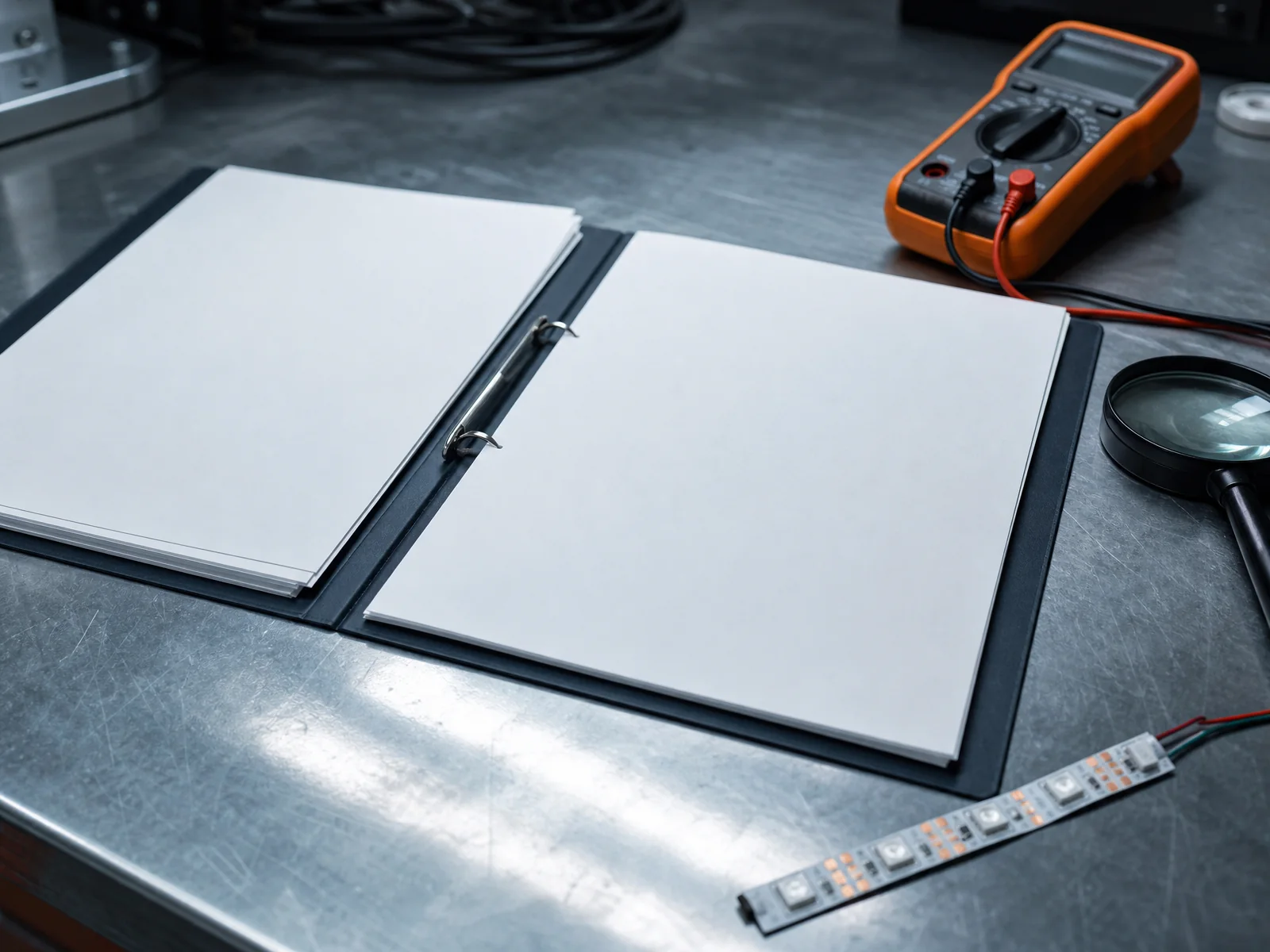
"What we hold" is a set of documents with numbers on them, not a badge on a web page.
</figure>
Who Actually Requires UL in the US — and Who Doesn't
The mark itself is not mandated by federal law; listing is a voluntary commercial service. What you meet instead are four requirements that usually produce the same sentence in a specification:
The Authority Having Jurisdiction (AHJ). The National Electrical Code requires equipment to be acceptable to the inspector and to be installed in accordance with its listing (NFPA 70, the National Electrical Code). In practice an inspector reads that as "show me the mark or I need another route to acceptance".
Workplace safety rules. OSHA's electrical installation standard requires conductors and equipment to be acceptable only if approved, and requires listed or labeled equipment to be installed and used in accordance with the instructions included in the listing or labeling (29 CFR 1910.303). This is a workplace rule, and it is the strongest form of "you actually need a mark" that exists in US law.
Insurers. Commercial policies commonly condition coverage on equipment being certified, and a fire traced to uncertified equipment is a conversation no one wants to have.
Project specifications and the general contractor. Many specs simply require a listed fixture. A subcontractor cannot invoice around that, whatever the technical merits of the product.
Notice what all four have in common: they attach to the installation and the job, not to the strip in its box. That is the whole reason the same product can be unusable on one project and perfectly workable on another — and why "do you hold UL" is the wrong first question. "Who is going to inspect this, and what will they accept?" is the right one. Projects whose compliance route runs through Europe ask a different set of questions, which our guide to exporting LED strip to the EU works through document by document.
The Strongest Case Against Buying Without UL
The best argument against us is usually made by an electrician, and it deserves repeating without softening:
"If it's not UL Listed I'm not installing it."
That is not stubbornness. That person's licence, insurance and name sit on the installation, and an unlisted fixture hands them a risk they cannot price. Next to it sit two more arguments worth taking seriously: a claim denied because the equipment was uncertified, and a project stopped at final commissioning because the fixture could not carry the mark the spec required. Neither is solved by a supplier saying "it's fine, nobody checks".
Here is where the objection lands squarely, and where it does not.
It lands on permanent, hardwired, mains-connected luminaires; on commercial premises that go through permits and inspections; on anything in a workplace covered by the OSHA standard; and on any installation whose insurance was written around certified equipment. If that is your project, the honest position is that a low-voltage pixel strip from a factory without a listing is not the piece of equipment to build it around — unless the building's compliance route can be handled another way.
It lands less heavily on temporary, touring and exhibition work; on low-voltage DC runs whose mains connection is made inside a listed power supply or driver; and on installations an AHJ has already accepted through a field evaluation. Whether those describe your job is a decision for your inspector and your insurer, not for us — we can tell you what our product is, and that is all we can tell you.
<figure>

The requirement attaches to the installation and the inspector, not to the product in its box.
</figure>
If you need the wider supplier-side picture — company registration, factory capability, samples, documentation discipline — our guide to vetting a China LED supplier runs the full process. Certificate gaps are one input to that decision, not the whole of it.
Four Honest Ways to Handle a Project That Needs UL
If your project does need a mark, there are four routes. None of them is "pretend the mark exists", and each has a cost you should see before you choose.
Put listed equipment at the mains boundary. The hazardous voltage in a pixel installation is at the mains connection; the strip itself runs at DC12V, DC24V or DC48V and draws from a driver or power supply. If that supply is a listed unit, the highest-risk part of your system carries a mark, and what sits behind it is a low-voltage DC circuit rather than mains wiring. This does not convert our strip into a listed product — the strip still is not listed — but it changes what the inspector is being asked to accept, and it is the pattern low-voltage decorative and display systems in the US commonly follow. Our IP68 addressable strip is built for the wet half of exactly that arrangement.
Ask for listing of your configuration. Third parties will list a product, and factories can commission it for a specific build. It is a paid, scheduled process with a lead time attached, and it applies to the models evaluated. Ask any supplier — including us — whether they can support it for your configuration and at what lead time. A supplier that answers "for this model, yes" or "for this one, no" is giving you information; a supplier that answers "we are UL certified, don't worry" is telling you which conversation you are in.
Get a field evaluation. When a finished installation cannot carry a listing, the recognised alternative is an evaluation by an NRTL at the job site, arranged through the electrical contractor. The cost and schedule sit with the end user rather than the factory, and the AHJ decides whether it is acceptable in that jurisdiction. It is a legitimate route, and it is worth asking about early rather than at commissioning.
Buy a listed product. If the specification says UL Listed and nothing else fits the schedule, that is the answer. It is not a failure for a supplier to say so, and it is a bad sign when one will not. Where you buy through a trading company rather than the factory, check whose name is on the certificate before you assume it covers your goods — the accountability question is the same one we run through in our guide to distributor and reseller terms.
<figure>
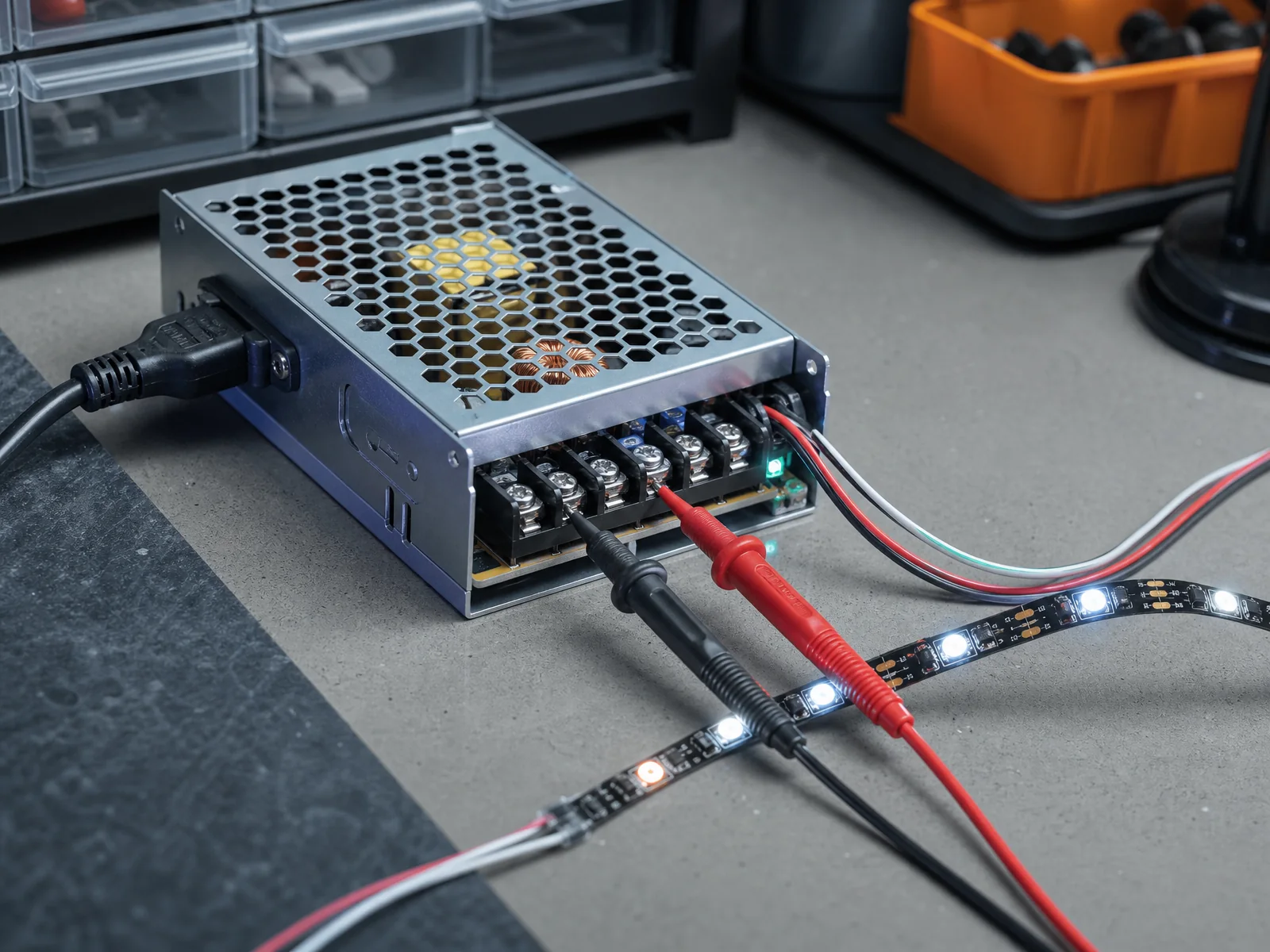
The route many low-voltage installations take: the listed mark sits at the mains boundary, the DC run sits behind it.
</figure>
Where LED Strip Sits in the Standards (UL 8750, UL 2108, and the Mains Boundary)
One reason this conversation goes sideways is that "LED lighting" is not one product category in the standards. The standards buyers ask about by number cover different things:
Standard | What it covers |
|---|---|
UL 8750 | LED equipment used in lighting products — drivers, arrays and their control interfaces |
UL 2108 | Low-voltage lighting systems |
UL 1598 | Luminaires for installation on branch circuits |
UL 48 | Electric signs |
UL 1598, UL 8750 and UL 48 are named on UL Solutions' lighting pages (UL Solutions: lighting standards and certification), and UL 2108 is the standard UL Solutions points to for low-voltage lighting systems — where the power unit is evaluated for fire and shock risk, while the low-voltage luminaires behind it are evaluated for fire risk only because the power unit limits the output voltage (UL Solutions: landscape and outdoor lighting). A mains-powered luminaire and a low-voltage DC strip built into a display are not the same object in that table, which is why a single "do you have UL" question produces answers that do not line up.
Two regulatory boundaries are worth keeping straight, because they explain what should carry paperwork and what should not. In the EU, the Low Voltage Directive applies to electrical equipment rated between 50 and 1,000 V AC or between 75 and 1,500 V DC (Directive 2014/35/EU) — a DC12V or DC24V strip sits below that band, while the mains-side driver does not. RoHS is a separate restriction on substances, not a safety mark, and it operates through test reports rather than a registry (Directive 2011/65/EU). In the US, the FCC's equipment authorisation regime is about radio emissions: a switching driver or a controller with digital logic typically falls under Part 15 Subpart B as an unintentional radiator, and that authorisation says nothing about electrical safety (47 CFR Part 15 Subpart B — unintentional radiators). Two more marks that get confused with certification: DLC listing is a voluntary qualified-products programme run by an independent non-profit and used by efficiency programmes, not a safety certification (DesignLights Consortium), and a BIS R-number speaks to the Indian market only.
How to Check Any Supplier's UL Claim in Five Minutes
Whatever a supplier tells you, the check takes minutes and needs no specialist access.
- Ask for the file number, in writing. For a UL mark it is printed with the mark on the product, and it is the key to everything else. No number, no claim.
- Look at the label on the actual product, not on a catalogue page or a brochure render — the mark, the file number, the manufacturer's name and the model all belong on the product.
- Search the issuer's own directory. UL Solutions publishes its certification database as Product iQ; ETL and CSA marks sit in equivalent registries run by Intertek and CSA Group. Search the number and confirm the holder is the entity you are buying from.
- Check what the record covers, then check whether it is Listed or Recognized. A Recognized Component record is not a listed product, however it is presented.
- Match the model. A file number that covers a related model, an older generation, or a different voltage and IP variant is not coverage for what you are buying.
The same discipline is what our guide to verifying an LED certificate number applies to every certificate family, including the ones we do hold. And if you are writing the requirement into a quotation, put the certificate fields in the document itself — file numbers, issuing bodies, model coverage — so you are comparing document sets rather than adjectives. Our pixel LED project RFQ and BOM template already has the field structure for it.
<figure>
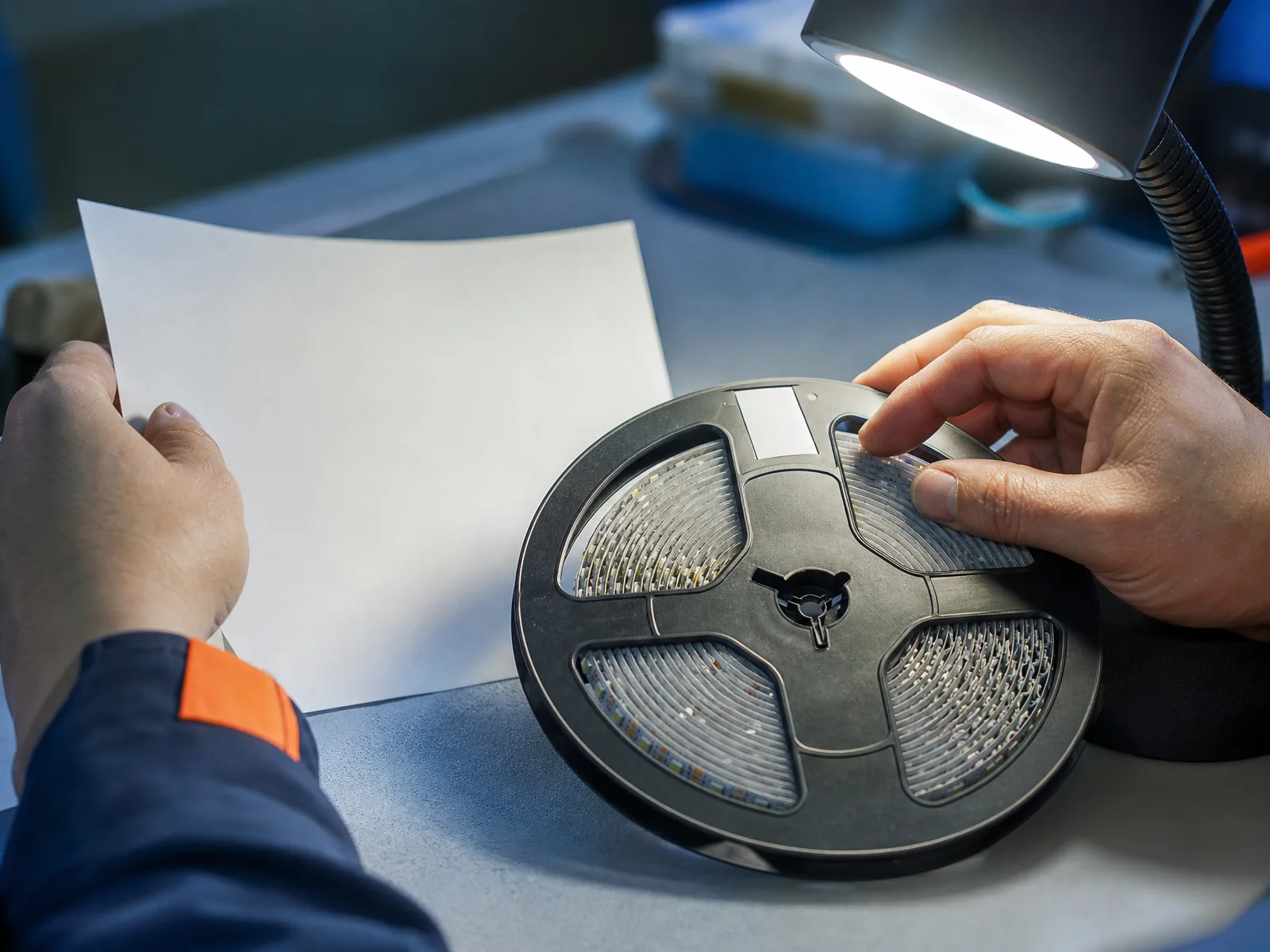
Verification is a physical act: the document, the label on the goods, and the order all have to agree.
</figure>
What We'd Tell You Privately
Pileds has been building programmable pixel LED fixtures in Shenzhen since 2015, shipping to 90-plus countries, and we hold the certificates listed above. We do not hold a UL listing, and no amount of reassurance from us changes what an inspector will look at.
So here is the short version, the one we would give you on a call rather than in a brochure. If your project is permit-bound, inspected, or hinged on an insurance condition, buy listed equipment — from us only where the listed-power-supply route or a project-level listing genuinely covers your build, and from someone else when it does not. If your project is low-voltage, display, temporary or otherwise outside the scope your inspector is enforcing, our certificates and test reports are the documents that matter, and we will hand them over with the numbers before you ask.
What we will not do is put a mark on a product that has not earned it, or tell you a certificate covers something it does not. Send your specification, your jurisdiction and the name of whoever signs off the installation to our team — we will tell you up front whether we are the right supplier for it, and if we are not, you will hear that in the first reply.
This article describes US and EU product compliance requirements as we understand them in October 2026. It is not legal advice, and it is not a substitute for your authority having jurisdiction, your insurer's conditions or your own compliance review; requirements vary by jurisdiction, project type and occupancy, and they change. Verify against the primary sources linked above before you specify.
Specifying pixel LED for a real project?
Send the spec — pitch, IC, IP class, run length, voltage — and you get an engineer's answer, not a catalogue. Samples and OEM/ODM quotes from the Shenzhen factory floor.