
3 Traps in Regional LED Distribution and How to Avoid Them
Three traps decide whether a regional LED distribution line pays: a territory that is not in writing, a line built from the catalogue, and an ex-works margin.
The three traps in regional LED distribution, at a glance
Regional LED distribution fails on structure, not on price. An LED lighting distributor who buys well and still loses money almost always lost it in one of three places: a territory that was never written down, a product line chosen from the supplier's catalogue instead of from the region it has to sell in, and a margin that was only ever calculated at the ex-works price.
None of those three is a negotiating skill. Each one is a document you either hold or do not hold before the first purchase order goes out — and in an LED lighting distribution channel, that is the difference between a market you own and a market you opened for someone else.
Trap | What it looks like six months later | The document that settles it |
|---|---|---|
| Your quotes get undercut by the same factory product, sold by someone who never paid for the market you built | A written territory definition with a named boundary, a project-registration rule and a stated consequence for violations |
| Stock you cannot legally or practically sell in your region — wrong supply voltage, wrong IP grade, certificates that cover a different SKU | Per-SKU, per-market evidence: certificate numbers you can look up, and the nameplate photograph of the unit that will ship |
| Landed cost eats the margin; a price change or a parallel seller arrives before the stock moves; the spares nobody costed become your problem | A landed-cost sheet per SKU, plus price protection, a stock-rotation or upgrade clause, and a named warranty and spares route |
If you are still deciding what a distribution arrangement even covers — MOQ, tiered pricing, samples, payment — start with pixel LED distributor terms, which works through the commercial clauses themselves. What follows is the layer above them: the three things that decide whether those clauses ever get a chance to matter.
Trap 1: the territory that only exists in an email
Ask a distributor where their territory is and you usually get a sentence: "we cover the Gulf", "we have the UK", "the Balkans are ours". Ask for the document that says so and the answer gets vaguer. That gap is where the first trap lives, and it is the most expensive of the three because you pay for it before you can see it.
Building a region costs money that does not appear on any invoice from your supplier: samples and demo units, a trade show or two, a local lighting designer who agrees to specify your line, a warehouse, a first stock position, and eighteen months of calls. All of that investment is only recoverable if the market it creates stays yours. If the boundary is not written down, the same factory can sell into the territory you paid to open — directly through its own online listings, through a second partner in the same region, or through a distributor in the neighbouring country who negotiated a better tier and now ships across your border.
Regional LED distribution adds a twist that domestic distribution does not have: the competing channel is usually fed by your own supplier, at a lower price than yours, because a second regional partner ordering in larger volumes sits higher on the same tier table. You are not defending against a stranger. You are defending against your own supply chain.

What to put in writing before you buy stock
Three clauses turn a verbal territory into a defensible one, and a fourth keeps the arrangement honest over time — none of them needs a lawyer:
- A named boundary. Not "the region" — the countries, states or named areas, listed, with a line for what happens at the edges (customers who cross the border, projects delivered into a neighbouring territory). A boundary you can point at is a boundary you can enforce.
- A project-registration rule. You register a project or a named account before you quote, and the supplier agrees not to quote it, sell it, or route it to another partner for a defined period. This is the clause that actually protects your quotes; without it, exclusivity on paper means nothing the moment a project becomes real.
- A stated consequence. What happens to the supplier's second partner who ships into your area, or to an online listing that reaches your customers? "We do not limit where our partners sell" is an answer — it tells you your territory is not protected and your pricing has to reflect that.
- A condition you also accept. Almost every genuine territorial arrangement has a counterpart: annual minimums, a stocking commitment, or a marketing obligation. Those are legitimate — but ask for them in metres or units per period, not only in money, so that a price change does not silently raise your obligation. The long-term version of this conversation — continuity, batch consistency, capacity, the four-stage qualification order — is worked through in our guide to vetting a supplier for long-term supply, and it is worth reading before you sign a multi-year territory rather than after.
Or score the four clauses against what a non-answer sounds like:
Clause | What a passing version says | What a non-answer sounds like |
|---|---|---|
Boundary | The countries, states or named areas, listed | "The region", or a territory map with no names on it |
Project registration | A project or named account registered before you quote, and a window in which the supplier will not quote it | "We will pass your enquiry to the right partner" |
Consequence | What happens to a partner who sells into your area, and to an online listing that reaches your customers | "We do not limit where our partners sell" |
Counterpart | Minimums stated in units or metres, per period, with the period and currency named | A single annual revenue figure with no unit behind it |
Trap 2: the line you built from the catalogue instead of the region
The second trap is quieter, because nothing about it looks like a mistake at the time. You choose the products your supplier sells best, in the configurations your supplier stocks. The line is coherent on the page. Then the first container lands and you discover that the two most expensive SKUs on it were never sellable in your region at all.
Four things differ between markets in ways a catalogue does not show:
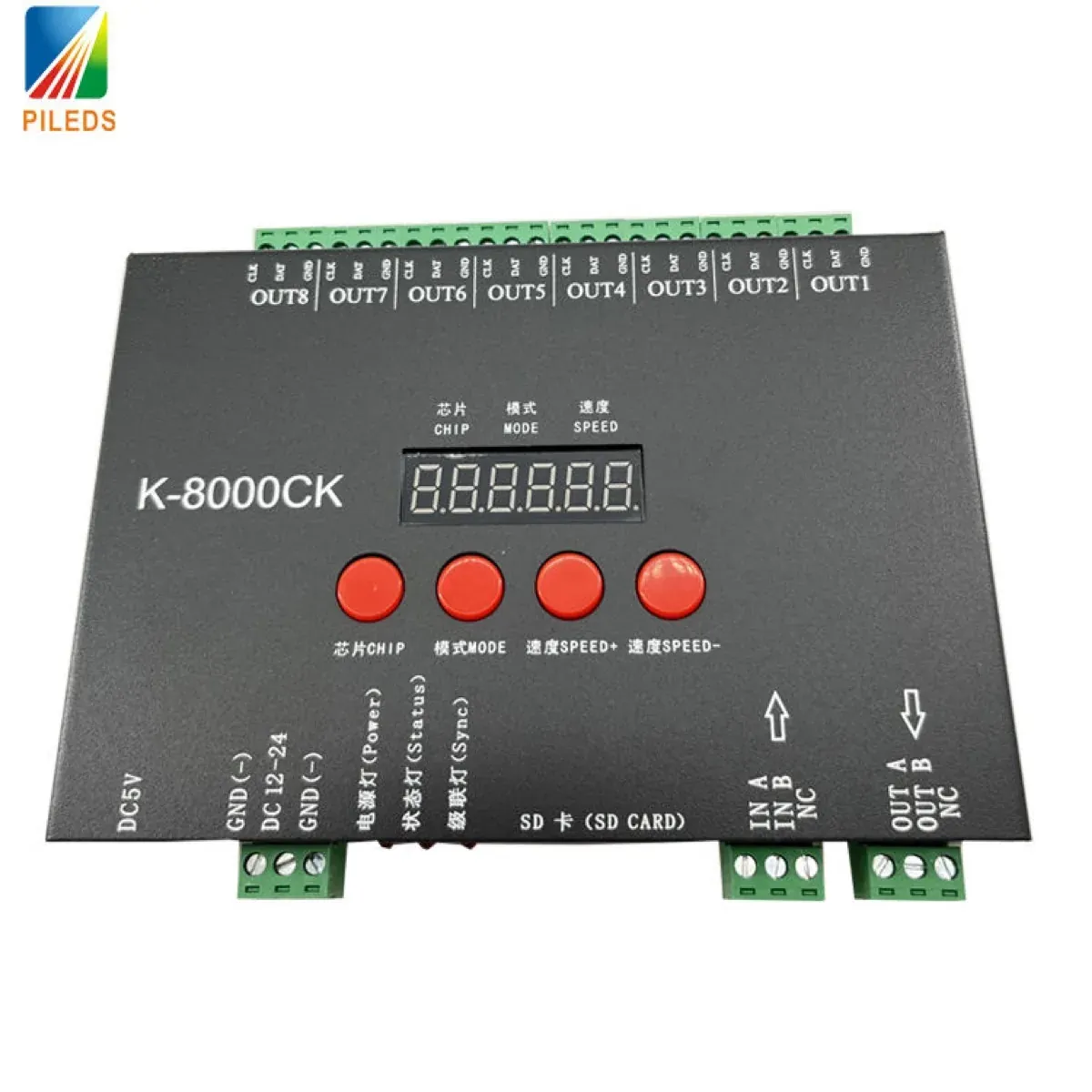
The supply side. The voltage and the plug arrangements a market expects are not a formality. A line configured around one mains voltage range and one connector family is a hard limit on where it can be sold, and pixel and addressable LED products make this sharper than commodity lighting does: the same fixture family exists across DC5, 12, 24 and 48 volts, and in some industrial uses at mains AC, and the control side has to match too. A configuration that is standard for one market's installers is a special order in another's.
The certification regime. This is where catalogue-first lines die. The European Union's CE marking obligations include the Low Voltage Directive 2014/35/EU for mains-operated equipment, the electromagnetic-compatibility requirements of Directive 2014/30/EU, and the hazardous-substances restrictions in Directive 2011/65/EU.
Other markets run their own routes: India through a compulsory registration scheme administered by the Bureau of Indian Standards, the United States through UL or ETL listing for safety and DLC listing wherever a utility rebate is involved, the Gulf and South-East Asia through their own conformity schemes. Whichever applies to you, the check is the same — and a certificate is not a property of a company, it is a property of a product. A supplier holding a full certification folder may still hold nothing that covers the exact model, voltage variant or IP grade you are about to stock. If your region's regime requires an approval your supplier has never obtained for that SKU, the stock in your warehouse is not a stock position, it is a negotiation with your own regulator.
The environment spec. IP ratings are tested on an assembled product against a defined method — the international reference is IEC 60529 — and the differences that matter to a distributor are placement, not vanity. A tray, a cove or a dry indoor fascia does not need the same sealing as a coastal facade, and buying the higher grade across the whole line to be safe is how a stock position becomes a margin problem. The reverse mistake is worse: a distributor who orders the cheaper grade because the catalogue lists it as the volume seller, then finds it is the wrong product for the wet environments most of their customers actually have.
The control chain. Addressable products are bought as systems, not as reels. Your region's installers will already own a way of driving pixels — an SPI controller, a DMX512-A network, Art-Net or sACN over Ethernet, or a mapping application such as MADRIX — and the DMX512-A standard itself is published by ESTA's Technical Standards Program. A line that arrives without the decoders, address writers and power supplies that fit that existing way of working will be specified around, politely, and never reordered.
Choose the SKUs against the region, not against the catalogue
Build a one-page requirement sheet for your region before you look at the catalogue again: the voltage and connector convention your market uses, the certification route each product category needs, the IP grades the common environments demand, and the control protocols your installers own. Then ask the supplier a single, hard question for each candidate SKU: which certificate, with which number, covers this exact configuration in this market, and can you send the nameplate photograph of the unit that will ship? An answer that arrives as a folder of company-level certificates is not an answer. An answer that names a number you can look up is. The mechanics of that check are set out in our walkthrough on verifying an LED certificate number for procurement, and if your region is the European Union, CE, RoHS and EMC for EU-bound stock narrows the list to what actually applies.
Start narrow. Five SKUs that are unambiguously right for the region will outsell fifteen that are merely available, and the five cost a fraction of the fifteen to correct.
Trap 3: the margin that only works at the ex-works price
The third trap is arithmetic, and it is the one an LED lighting distributor is most likely to believe they have already avoided — because the calculation that matters is not the one in the quotation.
Your supplier quotes ex-works. Your customer pays a delivered price. Which of the two costs in between — freight, insurance, duty and clearance — belongs to whom is decided by the delivery term you agreed, and the Incoterms rules published by the International Chamber of Commerce are the vocabulary that term comes from; a quote with no named delivery term quietly hands the freight risk back to you.
Everything after that is cost that exists whether or not it appears on the sheet you compared: the certificate and registration costs for your market, the warehousing and handling, the spares you will need to hold, the financing cost of money tied up in a container, and the currency movement between the order and the sale. A margin that looked healthy at ex-works can be a loss once the landed cost and the cost of holding stock are in the same row. Build the landed-cost sheet per SKU, not per order, and include the currency assumption and the date you made it.
Then ask how the number is protected once the stock is yours, because a landed-cost sheet only holds if three things hold with it.
Price protection. What happens if your supplier's price list changes before your stock sells? If the answer is "the new price applies to new orders, and your stock carries the old cost", you are the one holding the risk of that gap. Ask for protection to be written with a period and a currency: for a defined window, your existing stock is repriced or credited to the new level. And if the cost falls instead, you accept the same clause — a one-directional protection clause usually means it does not exist.
A way out of unsold stock. A stocking obligation is normal; being stuck with a forecast that was wrong is not a business model. Ask for a rotation or upgrade clause that lets you convert slow SKUs into faster configurations within an agreed period. Our notes on stocking a pixel LED line cover how to size the line card and the spares ratio; the question to settle here is different — who owns the mistake when the forecast misses, and how little it costs you to exit.
Warranty and spares, by name. A warranty is only worth what your customer can do with it. In regional distribution the practical questions are who receives the claim, in which country, whether your customer is sent to the factory or to you, and how fast a failed unit is replaced. Spares make this concrete: an addressable system is sold as fixtures and the controllers, decoders and address writers that drive them, and a line without a costed spares position converts every field failure into a full-RMA conversation you pay for. Get the warranty term, the claim route, the responsible entity, the spares list and their lead times in writing. Those five items are what a distributor audits first when a line starts going wrong.
Scoring an offer before you sign
Three traps, three sets of documents. Print this and take it into the next conversation — whether you are becoming a pixel LED strip distributor or extending a line you already carry. The mirror version is worth saying too: if you are the brand appointing partners, these are the same three documents. An LED distributor program without them is a price list with partners attached, and the channel around it dissolves into price competition between them.
Trap | Ask for | A passing answer | A warning sign |
|---|---|---|---|
Boundary | Territory definition, project-registration rule, violation consequence, minimums stated in units | A named boundary you can point at, a registration window, and a consequence that exists | "We do not limit where our partners sell", or exclusivity mentioned only verbally |
Configuration | Certificate number and nameplate photo per SKU per market; voltage, IP and protocol spec sheet; controller and decoder compatibility | Numbers you can look up, matched to the exact configuration you are ordering | A folder of company-level certificates, or "it is the same as the standard model" |
Landed cost and stock | Landed-cost sheet per SKU; price protection with a period and currency; rotation or upgrade clause; warranty term, claim route and spares lead times | Terms with a date, a currency and a responsible entity named | A single delivered price with no cost breakdown, and a warranty with no claim route |
Two habits make this work in practice. First, ask for the document, not the reassurance — the same question twice, the second time as "can you send it?". An answer that arrives with a document was already an answer; an answer that arrives after the request is the beginning of one. Second, write the boundary and cost assumptions into your own systems: the accounts you registered, the quoted projects, the landed cost per SKU. Half the value of a protected territory is being able to prove, when it matters, that the customer in question was yours.
What to ask for first when you take a line regional
If you are taking on a pixel or addressable LED line and want the first conversation to be worth having, ask for four things in this order: the territory definition with its registration rule; the per-market certificate and configuration evidence for the five SKUs you actually intend to stock; a landed-cost sheet with a protection clause and a currency; and the warranty, claim route and spares list.
A supplier who can answer all four has a channel worth building. A supplier who cannot answer the second and third is telling you which risks you would be buying.
Pileds builds addressable and pixel LED fixtures — bars, tubes, strip and point lights, with the controllers, decoders and address writers that drive them — and ships to more than 90 countries from a single factory. Our terms are published openly: a one-piece minimum order, free samples for qualified projects, certificates with verifiable numbers, and six quality checkpoints including a per-batch integrating-sphere colour and lumen test. The pixel LED strip range lists the configurations, and the OEM, ODM and distribution overview collects how custom and private-label programmes are structured. Send the region you intend to cover and your requirement sheet, and the answer you get back will be an engineer's, not a catalogue's.
Specifying pixel LED for a real project?
Send the spec — pitch, IC, IP class, run length, voltage — and you get an engineer's answer, not a catalogue. Samples and OEM/ODM quotes from the Shenzhen factory floor.