
Stocking a Pixel LED Line: Fixtures & Spares
How an LED strip distributor stocks a pixel LED line for pixel LED wholesale programs: fixture configs, controllers, spares and stock depth from lead time.
What stocking a pixel LED line means
Stocking a pixel LED line means choosing which addressable-LED SKUs a distributor, reseller or OEM brand keeps on the shelf — and in what relative depth — so that most enquiries can ship from stock while the rest are quoted straight from the factory. That is a different decision from project procurement. The question is not "what does this building need", it is "what small set of fixtures, controllers and spares makes the next twenty orders sellable".
Search results for this phrase mostly answer a different question: ask a search engine and the answer comes back as a shopping list for one person's display — strips, mounting track, a controller, some connectors. That is a build kit, not a line card, and the difference shows up in the arithmetic: a build kit is sized by one project, a line by a year of projects you cannot see yet.
The two failure modes are opposite and both expensive. Stock nothing and the customer who needs forty pixel bars this week buys them somewhere that has them. Stock everything and you have converted working capital into a warehouse of variations nobody asked for, each holding an IC generation that will be superseded on a schedule you do not control.
This page is about the middle: how to decide the assortment. It belongs inside the wider OEM, ODM and distribution guide, which covers the commercial relationship with the factory; here we stay on the shelf.
In short: a pixel line is defined by its control chain rather than its fixtures, since nothing you stock is sellable until a controller can address it; the fixture side is stocked by coverage rather than completeness; and depth comes from supply lead time rather than optimism, with spares a permanent line item.
The line is defined by the control chain, not the fixtures
A pixel fixture is inert until something addresses it. There is no way to demonstrate it, no way to test a return, and no way for your customer to light it on delivery without the pieces upstream of it: a controller or decoder that speaks the fixture's protocol, a power supply that matches its voltage and load, and a source for the data itself.
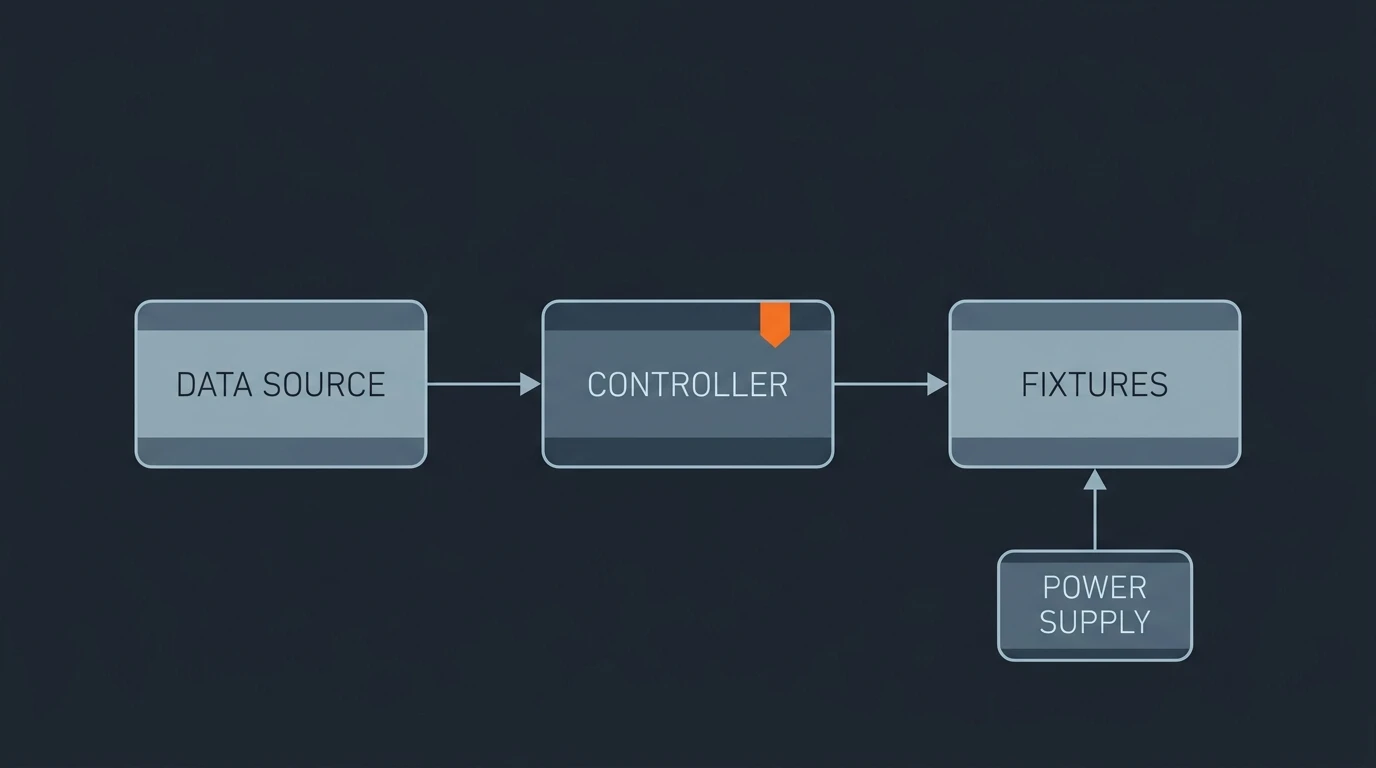
So the useful mental model for a line card is not a product list. It is a chain with four links, and the line is only as complete as its weakest one:
- Fixtures — the bars, tubes, strip, nodes and point lights a project actually specifies.
- Control — Art-Net, DMX512 or SPI controllers, decoders, and an address writer when the fixtures need addressing; the driver IC and protocol landscape decides which of those a given fixture family needs.
- Power — supplies and injection hardware matched to the fixture's voltage and the run lengths you intend to support.
- Spares and connectivity — the connectors, caps, tails and replacement nodes that turn a fault into a swap.
Most distributors who get this wrong do not get the fixtures wrong. They hold a credible fixture assortment and then discover that every enquiry includes a control question they cannot answer from stock. The customer's integrator will ask which controller you recommend, whether your nodes run on the controller they already own, and what the lead time is on a spare decoder. Each of those is a stock decision you either made in advance or make in a panic — and if you ship fixtures with no route to replace a failed node, every field failure becomes a factory conversation rather than a parcel.
The fixture configurations worth holding
A pixel line can describe a matrix with six axes: driver IC family, operating voltage, IP rating, color channels, pixel density and form factor. Multiply those out and you get hundreds of sellable variants. Hold them all and you have financed a catalog with your own cash.
The way out is to stock by coverage instead of by completeness. For each axis, ask what proportion of real enquiries a value can serve, then hold the values that carry the most enquiries and quote the rest on lead time. In practice four of those decisions do most of the work.
Axis | What it changes on the shelf | What to hold, and what to quote |
|---|---|---|
Driver IC family | Which controllers and protocols can address your stock at all | One or two families that dominate your customers' control ecosystem; the long tail is quoted |
Voltage | Which power supplies and injection scheme you must also carry | The voltage your customers' controllers and supplies already run; a second voltage only once demand is proven |
IP rating | Whether the same fixture covers indoor and outdoor work | One indoor grade and one outdoor grade, not five |
Color channels | How many fixture SKUs it takes to cover white plus color work | The channel mix your market asks for by default, with the odd configurations quoted |
LEDs per control point | How many density variants you must carry to cover one run | The ratios your customers' projects specify; the rest are quoted |
Form factor | Whether you can answer bar, tube, strip or node enquiries | The two or three formats that match your customers' applications |
Two of those axes determine what you can sell later, not just today.
Voltage is a supply decision disguised as a fixture decision. Every voltage you hold obliges you to hold matching supplies, and it narrows the pool of controllers your customers can use. Distributors carrying both 12 V and 24 V lines have effectively doubled their power side. The engineering trade-offs are their own subject — 12 V, 24 V and 48 V compared — but the stocking consequence is simple: pick the one your market's controllers and supplies run on, and quote the other.
Colour channels decide how many SKUs cover the same wall. Moving from RGB to RGBW or RGBIC changes both the fixture and the channel budget the controller has to carry (RGB, RGBW and RGBIC compared). Holding one default and quoting the alternative is usually enough; holding four channel variants of one fixture is how a line card doubles inside a year.
For linear fixtures the form factor decision is worth making early, because a pixel LED strip roll, a finished pixel bar and a pixel tube are not interchangeable in a customer's mind even when they are similar inside — bars versus tubes is a format conversation, and your line card should answer it rather than dodge it.
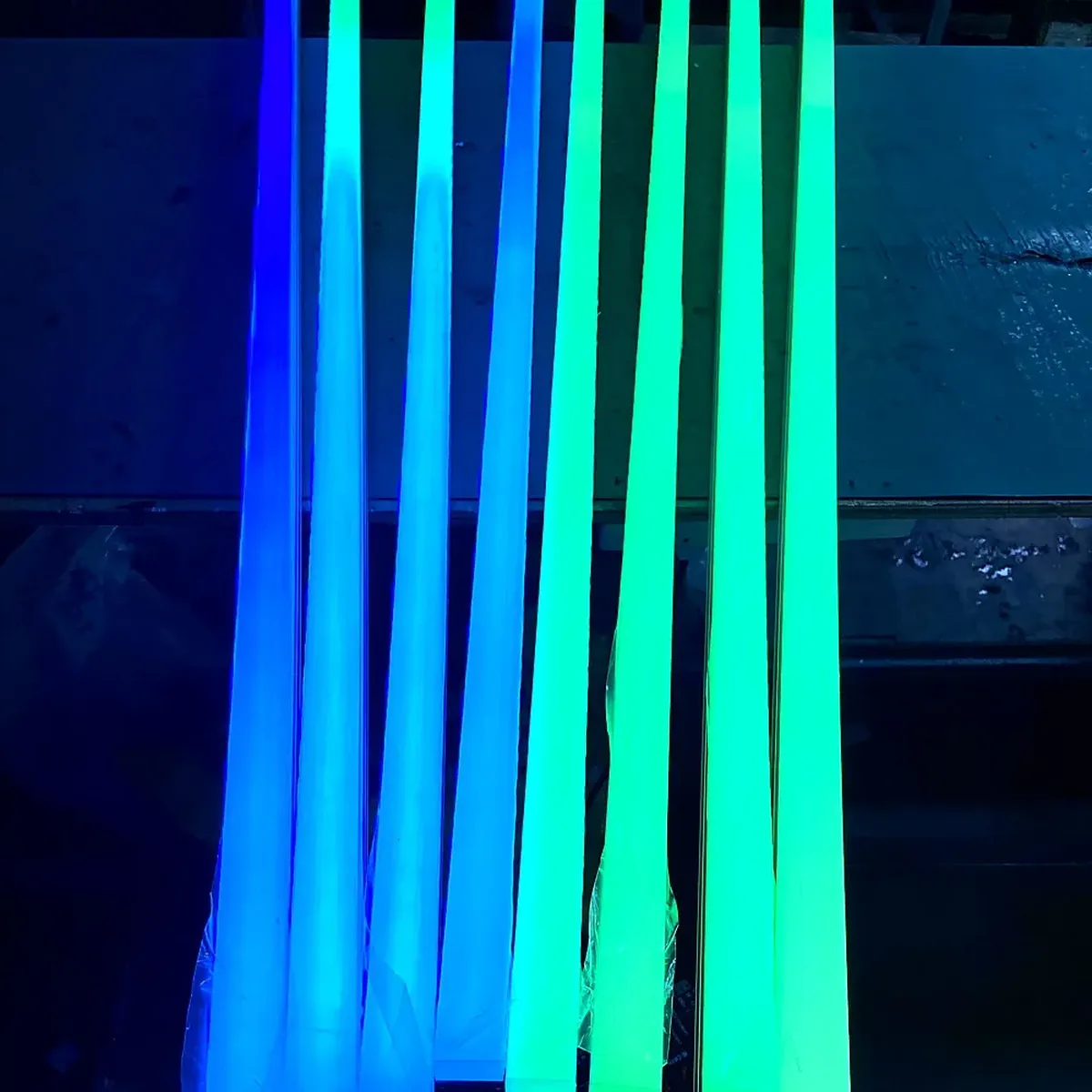
The same logic holds inside a single family. A fixture can be built with one control chip per LED, per three LEDs or per six, and a wider or narrower board decides whether it fits the profile the customer has already installed — separate stock-keeping realities even when the housing is identical. Know which of them your customers specify before you commit to a density.
Then say no on purpose. The configurations you quote rather than stock are not a weakness — they are the reason the line is affordable, and written down next to the held SKUs they give your sales side an honest answer to "can you do X".
Controllers, decoders and power supplies: the SKUs that make the rest sellable
If the control chain defines the line, the pixel LED controller is where the money and the risk concentrate. It is also where one purchasing decision can shrink the whole assortment.
A single multi-port controller can drive a family of fixtures that differ only in housing, length or density, because what the fixture needs from the controller is a compatible protocol and enough channels — not a matching model number. Every fixture SKU that shares that protocol is a SKU you can sell to a customer who already owns one of your controllers. This is the SKU-reduction lever: stock the controller first, then let it decide how many fixture variants are worth holding. A line with two controller families covering most of the fixtures will look narrower than a competitor's catalog and will answer more enquiries from stock.
The arithmetic behind port counts is public.
- A DMX512 universe is 512 channels, so a plain three-channel RGB node consumes three channels: about 170 nodes per universe, before you allow anything for refresh headroom (DMX512).
- SPI-class, single-wire clockless nodes take their data differently — a WS2812B-style device accepts 24 bits per node at 800 kbit/s, which the datasheet states supports a cascade of at least 1,024 points at a 30 fps refresh (WS2812B datasheet).
- Art-Net carries the same channel model over Ethernet with a far higher ceiling, so a port-limited controller becomes a network question rather than a fixture-count question (Art-Net).
Those three numbers explain why the controller you stock defines the projects you can quote, and why the protocol comparison is its own page (DMX512 versus Art-Net). The stocking version of that decision is simpler: hold at least one controller your customers' software and hardware already speak, and do not hold a protocol nobody has asked you for.
Three controller decisions are worth writing into the line card explicitly:
- A floor stock of multi-port units, for the project that needs sixteen outputs and will not wait for a factory lead time.
- A small stock of decoders and address writers, including a compact SPI LED controller for single-fixture jobs — the cheapest way to rescue a stalled order.
- Power supplies sized to the fixtures you actually hold, with the sizing method treated as its own discipline (how to size supplies for the fixtures you hold) rather than a guess made at quote time.
If you stock controllers but never test them against your fixtures, you have moved the risk to your customer. A bench holding one of each fixture family, one controller per protocol you sell and a supply of each voltage lets you prove a pairing before it ships, and lets a customer see it working — which is the part a catalog photo cannot do.
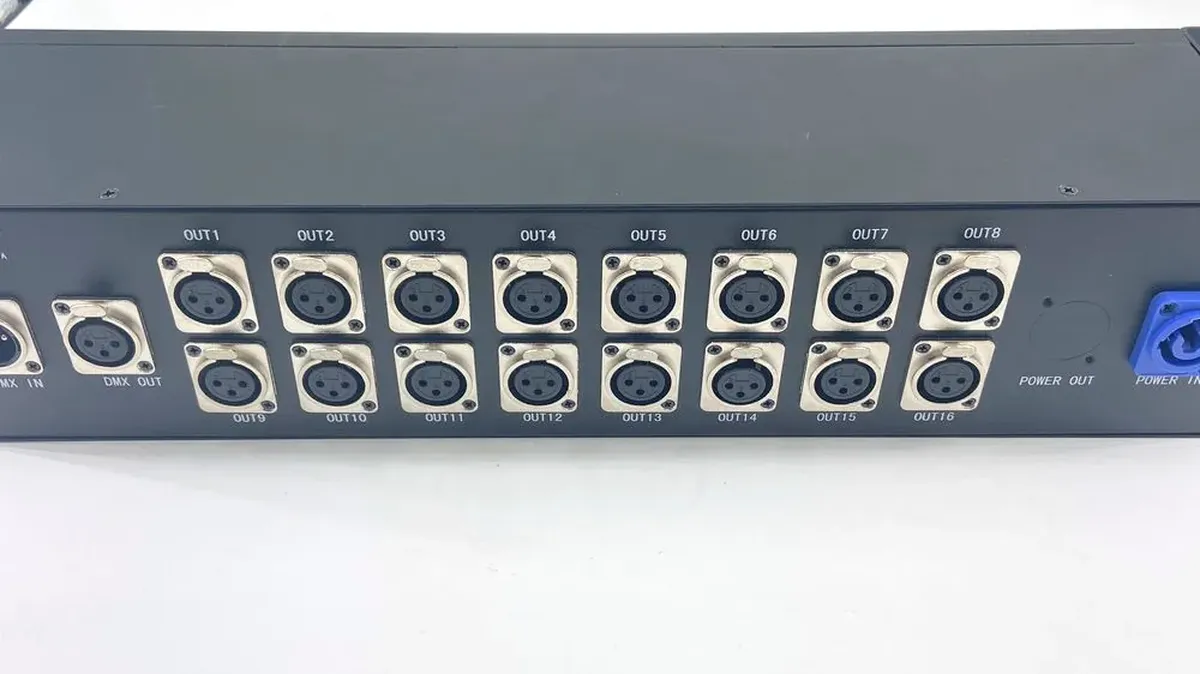
Manufacturers differ in how much of this hardware they actually make. The controller range we build runs from multi-port Art-Net and DMX512 units to SPI controllers, decoders and address writers — which matters to a line card in one way: controller and fixture come from the same engineering side, so a protocol question about a SKU on your shelf has a real answer.
Spares: the smallest line item with the best repeat rate
Pixel LED spare parts are the part of a line that distributors under-order and then re-order forever — low initial attention, high repeat frequency, which is what makes them worth designing in rather than adding when a customer complains.
Spare class | What it rescues | How to size the first buy |
|---|---|---|
Replacement nodes or node strings | A single failed pixel in a long run, a cut string, a handling breakage at install | As a small proportion of the nodes you ship per project, never below the smallest orderable pack |
Connectors, caps and tails | Water ingress points, dry joints, mating problems at the fixture ends | A multiple of the joints in a typical job, plus a stock of both mating halves |
Power supplies and injection hardware | Load changes, voltage drop corrections, a supply that fails on site | One or two of each rating you sell, scaled to the voltage classes you hold |
Decoders, address writers and controllers | A protocol mismatch discovered late, a lost or failed controller | A working floor stock, replaced as it is consumed |

The sizing rule that survives contact with real orders is to set the spare allowance as a proportion of what you ship, and to keep that proportion in the line card so it does not get argued down on every quotation. The proportion is a business decision — it depends on your return rate, on how punishing the installation environment is and on how slow the factory lead time is — but the mechanism is not: spares are consumed, so they are replenished on a different trigger from fixtures.
It also changes how you buy. Spares and connectivity are the natural candidate for a genuinely low minimum order, because they are what a customer re-orders in small quantities and expects quickly — see the pixel strip accessories guide for the categories themselves. Adding them to the fixtures' shipment is usually the cheapest place in the line card to find margin.
How deep to hold: depth comes from lead time, not optimism
Breadth decides what you can sell. Depth decides how long you can keep selling it while a replenishment is in transit. Getting depth right is the difference between a line that turns and one that ages.
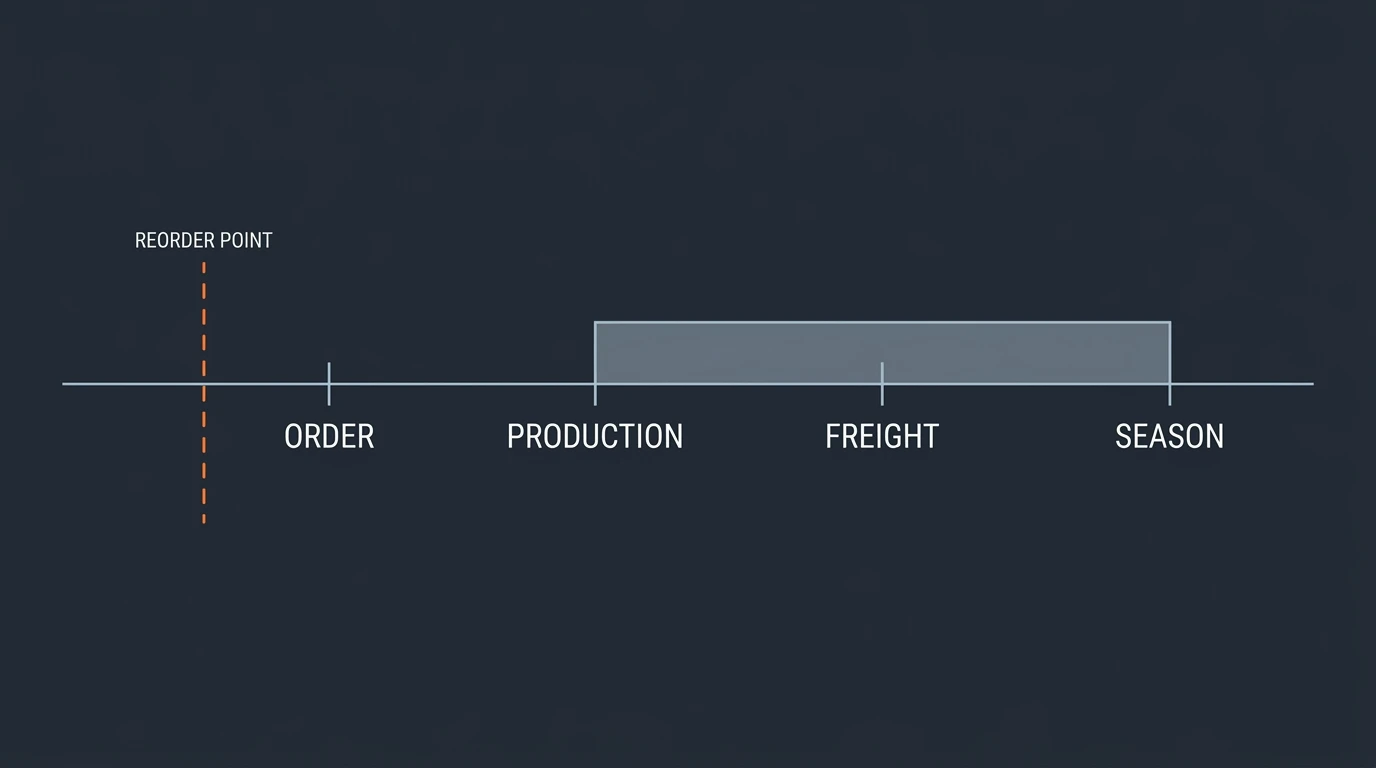
The mechanics are the ones any stock controller would recognize, applied to a supply chain with three clocks rather than one:
reorder point = demand during lead time + safety stocklead time = production + freight + inbound handling
All three clocks are long enough to matter: production runs on a factory schedule, ocean freight adds weeks rather than days, and inbound handling adds more before the goods are sellable. Safety stock absorbs the variation in each, plus the fact that demand for a pixel line is not smooth.
Demand here has a season: display, event and holiday work clusters into a window where every customer wants fixtures at once, and the orders that arrive then decide whether the year was good. Working backwards from that window is the most useful planning exercise available — the order that puts stock on the shelf before the season starts is placed during the factory's quiet period, which is also when MOQ and sample terms and capacity are easiest to negotiate.
Three habits separate a working line card from a hopeful one.
- Phase the first order. Breadth first: one or two units of everything you intend to carry, enough to sell and demonstrate. Depth second, funded by what actually sold.
- Set the trigger per class, not per line. Controllers, spares and high-turn fixtures reorder on a low remaining count; slow, expensive or heavily configured stock reorders on a confirmed order rather than on a hunch.
- Keep the cover target in weeks, and review it against lead time. If the factory's lead time moves, the cover target is wrong the same day, and the shelf will not tell you.
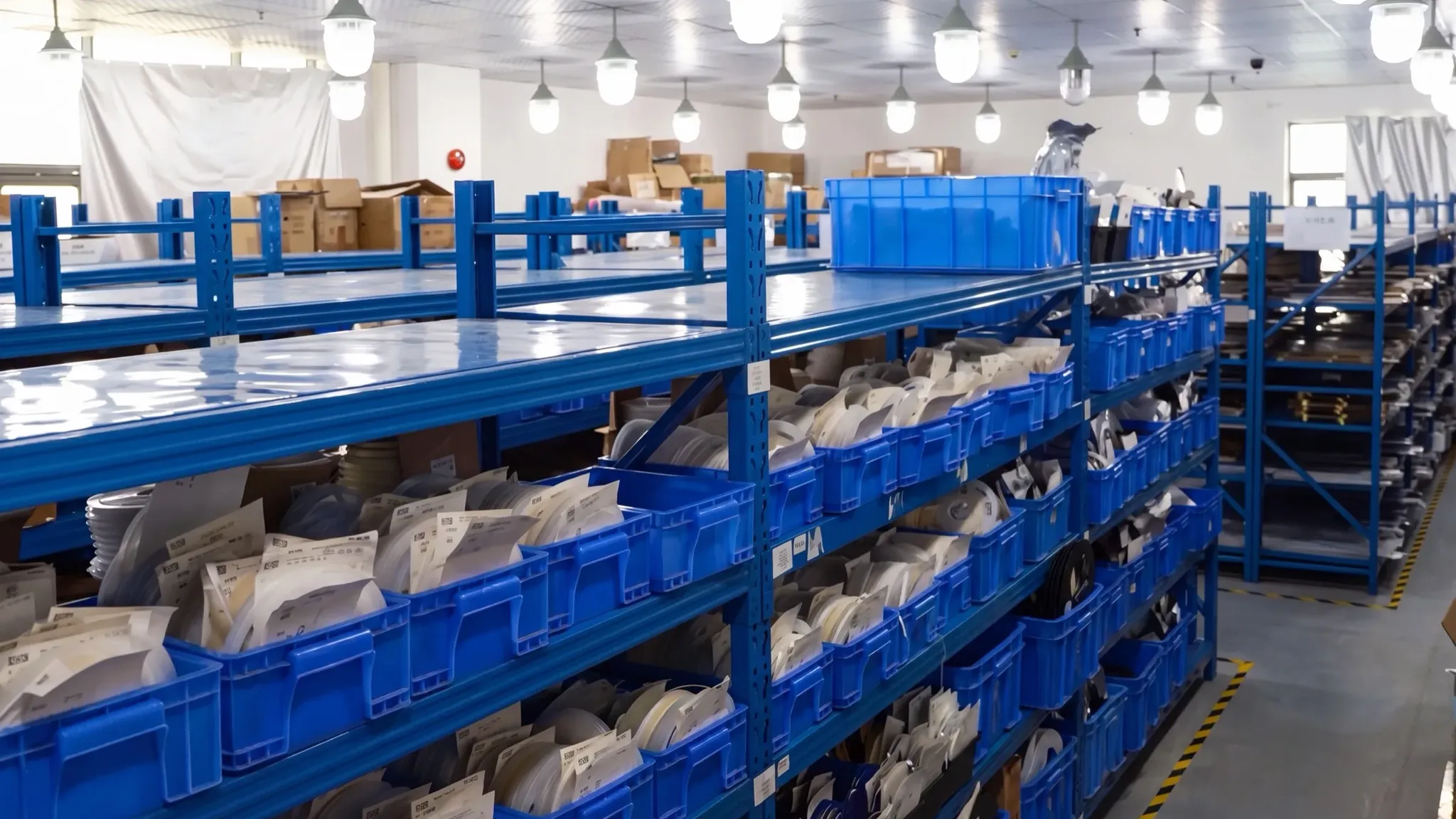
Held stock is a physical asset with a cost of carry, and the bill for it arrives slowly: variations that were never going to be re-ordered still have to be paid for, counted and insured.
What kills a line card
Lines rarely die of competition. They die of the stock you cannot move, and of the assumptions that made it look safe. Five risks are worth building into the line card from the first order.
Driver IC obsolescence. Pixel fixtures are built around a control chip, and chips reach end of life. A configuration that sells steadily can become unsellable the moment its IC is discontinued with no drop-in replacement, and the stock on your shelf gets no warning. Prefer configurations whose IC has an available second source, and ask the factory what the forward plan is for anything you intend to hold for years. Fixtures fall into this category more often than controllers do, because controllers are usually built around parts with longer availability.
Custom and OEM runs. A private-label or custom-configured run is often the best-margin part of the line — and the least reversible, because it carries your customer's specification, packaging or branding and cannot be sold to anyone else. Treat it as a committed order inside your stock plan rather than as ordinary inventory: get the minimum quantity, the tooling or set-up position and the cancellation window in writing before you commit, and price the non-returnable portion into the deal.
Batch color consistency. On a facade or a stage, mixed batches are visible. When you buy a project's fixtures in one shipment, batch matters less; when you service a growing installation out of stock over two years, it matters a great deal. Output also falls away over service life — the industry states useful life as the hours until light output reaches 70% of its initial value, the L70 convention (lumen maintenance) — so a two-year-old batch and a fresh one are not optically identical even when the part number matches. Ask what is measured per batch and keep the record with the stock, so a re-order can be matched rather than guessed.
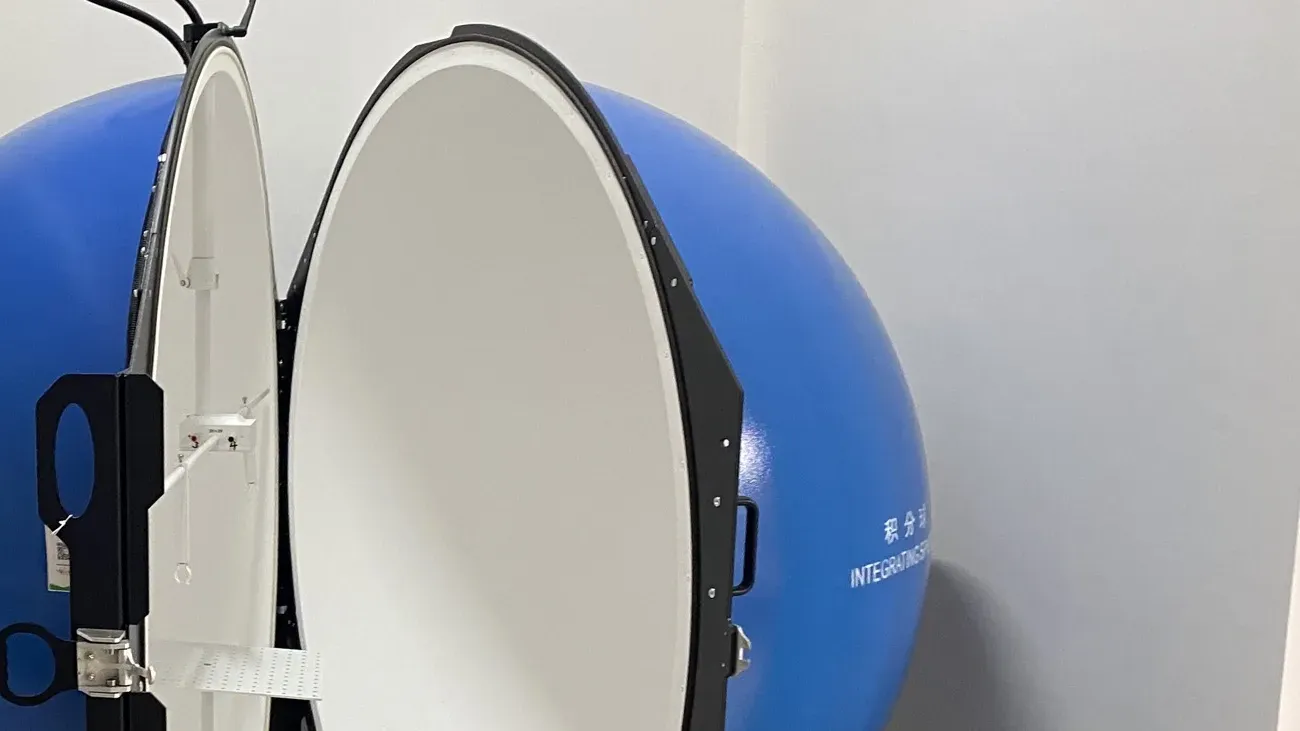
Compliance paperwork per market. Documentation has a lead time of its own, and an order that cannot clear is not stock, it is a liability. Keep the compliance file for every SKU you hold current, and satisfy yourself that the factory can produce the paperwork when a customer's customs broker asks. The factory behind a line can answer this concretely: at ours, color point and lumen output are verified on every batch in an integral sphere, and six checkpoints run from incoming components to a full function and control test before packing. Checking that a supplier can substantiate what it claims is a discipline of its own (vetting the factory); for a distributor the stocking rule is simpler — do not hold depth in a SKU whose paperwork you cannot produce on demand.
Depth in the wrong axis. A line can look well stocked and still fail, because the depth sits in the variations that were easy to buy rather than the ones customers order. Review the mix against actual order lines each season, and let the evidence decide where the next depth goes.
A starter line card you can copy
What follows is a structure, not a shopping list. Fill it with the configurations your own market asks for; the point is the shape, and the discipline of marking every SKU as stock, floor stock or quote-only.
Class | What belongs in it | First-order treatment | Why it earns its place |
|---|---|---|---|
Linear pixel fixtures (bars, tubes) | The two or three formats your customers specify most, in the voltage and IP grade you chose | Hold, shallow | These answer the most enquiries per SKU and demo well |
Flexible pixel strip | One or two densities in the dominant chip and channel mix | Hold, shallow to medium | The default pixel product for most projects, and the easiest to re-order |
Node and point products | The node forms your customers' installations use, not the full range | Hold one, quote the rest | High enquiry volume, but configuration sprawl is expensive |
Multi-port controllers | One unit per protocol you intend to support | Floor stock, replenished | Nothing else on the shelf sells without them |
Compact controllers and decoders | The pieces that adapt an existing controller to your fixtures | Floor stock | The cheapest way to unblock a stalled order |
Address writers | Where your node products need addressing | Floor stock, one or two | Turns an address problem into a same-week fix |
Power supplies and injection hardware | The ratings your held voltages and run lengths require | Hold, matched to fixtures | An unsellable fixture without it |
Connectors, caps and tails | Both mating halves for every fixture end you stock | Hold, generous | Consumed on every job, re-ordered constantly |
Replacement nodes and strings | The node types you hold, in cut quantities | Hold, proportion-based | The single most requested spare |
Custom and OEM configurations | Anything branded, cut or configured to one customer | Quote, committed order only | Best margin, zero reversibility |
Two additions make the table work: a bench kit (one of each family, a controller per protocol, a supply per voltage), and a written quote-only list, so the line has a defined edge and your sales side stops promising unchecked lead times.
Common questions about stocking a pixel LED line
How many SKUs does a starter line need? Fewer than most distributors expect. Four categories — fixtures, controllers, power, spares — with one or two held configurations each will answer a surprising share of enquiries, because the configurations that carry the most demand are not evenly spread across the range.
How much spare stock should I hold? Set it as a proportion of what you ship, per class, and keep it in the line card. Nodes and connectors turn over fastest; controllers and power supplies only need a floor. Replenish spares on a separate trigger from fixtures and the mechanism stops being renegotiated every order.
Do I need a controller for every fixture I stock? No, and this is the leverage in the whole line. Fixtures that share a protocol and a control ecosystem share controllers, so one well-chosen family can make many fixture SKUs sellable. What you cannot skip is holding at least one controller for every protocol you intend to support.
How long can I hold pixel fixtures before the driver IC is obsolete? There is no calendar answer, because it depends on the specific chip and its availability. Ask the factory about the forward plan for any family you intend to hold for years, favour configurations with a second source, and avoid depth in a chip family whose discontinuation would strand the stock.
What if a customer asks for a configuration I do not hold? Quote it, with an honest lead time, and log it. A pattern of quote-only enquiries in the same configuration is the strongest evidence you will get that the line card is missing something — and it costs nothing to find out that way rather than by buying the stock first.
Should I stock fixtures, or just the control and spares? A line with control and spares but no fixtures cannot answer the enquiry that starts the relationship, and a line with fixtures but no control loses the customer to whoever can supply the working chain. Stock both, but hold the depth on the control side first.
What to do before the first order
Take the decisions in the order the chain forces on you, and the first order builds itself. Choose the voltage and the control ecosystem your market already uses. Pick the fixture formats and channel mix that cover the enquiries you actually get. Set the control floor stock that makes every held fixture sellable. Add spares as a permanent class with a proportion attached. Only then decide how deep to go, and phase it — breadth first, depth against evidence.
Before you place it, three documents are worth having on paper: the quote-only list that defines the edge of the line, the bench kit that lets you prove a pairing, and the cover targets in weeks for each class. With those three, a new enquiry turns into a stock check instead of a scramble.
If you are building the line now, send us the specification list you are trying to cover, or use the project RFQ and BOM template to put it in a form a factory can quote against.
Specifying pixel LED for a real project?
Send the spec — pitch, IC, IP class, run length, voltage — and you get an engineer's answer, not a catalogue. Samples and OEM/ODM quotes from the Shenzhen factory floor.