
LED Pixel OEM: What You're Really Buying
A pixel LED OEM order is not the same deal as ODM or private label. What transfers at the end, what to specify, and how to audit the factory behind the quote.
Three letters carry most of the confusion in this part of the market. An LED Pixel OEM order can mean a factory building to a drawing you own, a factory building its own design under your brand, or a supplier relabeling a catalog reel before it goes in the box. Suppliers use the same phrase for all three, and from the outside the quotes look identical.
That matters because the word is doing commercial work, not descriptive work. What separates a real OEM program from a branded resale is not the logo on the housing. It is who holds the drawing, who paid for the tooling, what happens to both when the program ends, and whether the fixture you helped define can be sold to your competitor next quarter.
The short version: LED Pixel OEM means a pixel LED manufacturer builds addressable fixtures to a specification or drawing the buyer owns, and ships them under the buyer's brand. Design control stays with the buyer; the factory supplies process, materials, testing and capacity. Everything else in this guide follows from how seriously both sides take that sentence.
This page is written for people already past the "what is an addressable LED" stage: product managers at lighting brands, technical buyers at distributor houses, integrators who need a repeatable fixture rather than a one-off order. If you are buying a single reel for a test rig, most of this will feel like paperwork for a problem you do not have yet. If you are about to commit a product line to a supplier, this is the paperwork.
The wider map — where OEM, ODM and distribution sit relative to each other in the pixel supply chain — is the subject of the OEM, ODM and distribution hub, which collects the articles in that cluster. This article zooms into the OEM lane specifically.
In this guide: the three deals · what transfers when a program ends · the brief that gets a custom pixel LED manufacturer to quote accurately · where programs break · auditing "we are a factory" · what a certificate covers, and what it doesn't · the program timeline · quick answers.
OEM, ODM and Private Label: The Same Fixture, Three Different Deals
The three arrangements produce products that look the same on a shelf and behave completely differently in a contract.
OEM is build-to-print. You bring the drawing, the specification or a physical sample that has to be matched, and the factory engineers the process around it. The design authority is yours. If the fixture is the thing your customers are buying you for, this is the lane that protects it.
ODM is build-to-spec-from-catalog-plus. The factory presents an existing design — sometimes a platform it sells to several brands — and modifies it within limits: a different connector, a different length, your color temperature, your packaging. The design originated with the factory, so a pixel LED ODM arrangement buys you speed rather than ownership. You gain engineering you did not have to pay for; you give up the right to assume nobody else has it.
Private label is the thinnest layer — the arrangement most buyers mean when they say private label pixel LED. A catalog product, unchanged, with your logo on the housing, the label and the carton. No new drawing, no new tooling, no exclusivity worth arguing about. It is a legitimate way to test a market, and a poor way to build a brand that has to defend a price.
Who designs | Who owns the drawing | What you can change | Where it fits | |
|---|---|---|---|---|
OEM | You (or you and the factory jointly) | You, if the contract says so | Almost anything the process allows | A product your brand is judged on |
ODM | The factory | The factory, usually | Housing, connector, length, color, packaging | Fast entry, second product in a range |
Private label | The factory | The factory | Logo and packaging | Market testing, commodity lines |
The decision rule is simpler than the comparison table. Ask what your business actually sells. If customers buy you because the fixture does something specific — a pixel pitch, a curvature, a control behavior, a housing that fits a particular extrusion — you need OEM, because that specificity is the asset. If customers buy you because of your channel, your service or your brand, ODM gets you to market faster and there is no shame in it, provided you know that the same fixture may exist elsewhere under another name. If you are testing whether a market exists at all, private label is a cheap experiment, and it should be labeled as one internally.
Here is the question that separates a promise from a document: whose drawing are we building to? A custom pixel LED manufacturer selling genuine OEM will answer with a revision number, a drawing you sent, or a specification you both signed. A supplier selling ODM under the OEM label will answer with a model number from its own catalog. Neither answer is dishonest — but only one of them tells you what you own.
What Actually Transfers When the Program Ends
Most buyers negotiate price and MOQ and never ask this question, which is why it tends to surface at the worst possible moment: when the program is successful and someone else wants to copy it, or when it fails and you want to move it.
The assets at stake are physical and digital, and they are not all equally obvious:
- Tooling and molds — extrusion dies, injection molds for end caps or diffusers, jigs built to hold your PCB.
- Drawings and manufacturing files — PCB gerbers, mechanical drawings, assembly drawings, the panelization.
- Firmware and burn files — for fixtures with onboard logic, address handling or built-in effects.
- Test assets — the test jig, the acceptance thresholds, the golden sample kept as the color and brightness reference.
- Brand assets — artwork for the label, the carton dieline, the manual, the silkscreen on the PCB.
- Compliance paperwork — the technical file behind the declaration of conformity, and the test reports inside it.
An OEM program that leaves all of this with the factory has not really transferred design control; it has rented it. The reader who wants to avoid that does not need a legal education, just four questions sent in writing before the first sample is approved:
- Which physical assets are dedicated to my order — molds, dies, jigs, test fixtures — and are they invoiced to me, amortized into the unit price, or absorbed?
- If I move the program, can I take them, and on what terms?
- Will any product built from my drawing, firmware or tooling be sold to anyone else, in any market, under any brand?
- Who holds the technical file and signs the next revision, and who is notified when a component changes?
A verbal "of course it is yours" is worth what it cost. The answers that count are in the quotation, the purchase order or the supply agreement, and the fourth question is the one buyers forget — it decides whether you or the factory signs the revision that ends up being produced. Keep the golden sample somewhere you control, not only at the factory: it is the object every later batch is measured against.
The Brief That Gets a Custom Pixel LED Manufacturer to Quote Accurately
Most slow quotes are not the factory's fault. They are the result of a brief that leaves the two or three fields that drive cost and feasibility open, so the sales engineer either guesses or asks a round of questions that costs a week.
A brief that gets a real answer names the following, in this order:
Field | What it decides | Why the answer moves |
|---|---|---|
Fixture form — bar, tube, point, strip, neon | Which platform and tooling apply | A tube and a bar share an IC family, not a production line |
Driver IC family | Addressing behavior, channel count, failure tolerance | External vs integrated IC changes the PCB, not just the chip |
LEDs per meter and pixels per meter | Resolution, cost, power | These are two different numbers and are often conflated |
Operating voltage | Run length, current, power distribution | 5V, 12V, 24V and 48V solve different installation problems |
Color configuration | Channel count, white quality | RGB, RGBW and RGBCCT are three different builds |
Control protocol and controller model | Compatibility, pixel capacity | SPI, DMX512 and Art-Net are not interchangeable at the fixture |
IP rating and sealing method | Enclosure, joints, cable exit | The number is a test result; the method is what survives site |
PCB width and cable exit position | Whether it fits the extrusion, channel or housing | A millimeter decides which profile, bracket and lens are possible |
Cable, connector, termination | Assembly time at your end | A connector change can remove a whole step from your line |
Length, cut increments, packing | Logistics and waste | Cut points constrain the mechanical design |
Quantity plan — sample, pilot, production | Process setup and pricing structure | A pilot run and a production run are quoted differently |
Two fields deserve their own heading because they cause the most rework.
LEDs per meter versus pixels per meter
A strip with sixty LEDs per meter can have sixty pixels per meter, where every LED is individually controlled, or twenty pixels per meter, where three LEDs move together as one addressable point. Identical LED count, very different animation resolution and very different cost. If your brief says "60 per meter" and means pixels, the first sample will look wrong in a way that is hard to argue about after the fact. Say both numbers, and say which one the effect depends on.
Control protocol and controller
The fixture has to speak what your controller speaks. If the answer is "DMX", ask which universe size, how many pixels per port, and whether the controller outputs DMX512 natively or converts to SPI at a decoder. The arithmetic is unforgiving: a DMX512 universe carries 512 channels, so an RGB pixel at three channels per pixel fills roughly 170 pixels per universe, and an RGBW pixel at four channels fills 128. A design that needs 400 addressable points is a three-universe design before anyone talks about fixtures. If the control layer is MADRIX or another Art-Net console, the fixture's protocol answer has to match what that console outputs, not what a datasheet claims the fixture can do.
Both dominant protocols are published documents rather than trade secrets — DMX512 is standardized as ANSI E1.11 by ESTA and Art-Net is maintained as an open specification — which is useful when a supplier's compatibility claim and your controller's manual disagree. Getting that wrong is not a fixture defect; it is a system design you will discover on site.
For strip-based programs — an OEM pixel LED strip built on flexible PCB, for instance — cut points, voltage drop and connector choice are specified in more detail in the guide to custom LED strip for sign and fixture projects, which walks the same fields from the strip side.
If you want a starting structure rather than a blank email, the pixel LED project RFQ and BOM template is built around exactly these fields, including the ones that decide whether the answer is feasible at all.
Where Pixel OEM Programs Actually Break
Failures in this category are rarely a dead LED. They cluster in four places, and all four are visible before production if the brief is read carefully.
The control chain is quoted as three separate purchases. Fixtures from one supplier, controller from a second, software from a third. Every interface is then someone else's problem, and the first person to discover the mismatch is the installer. If the fixture and the controller come from different vendors, at minimum confirm pixel count per port, protocol at the fixture, and the refresh behavior at the pixel density you specified. Where the disagreement is about what a driver chip can do, the addressable LED driver IC guide sets out what each family tolerates and where it fails.
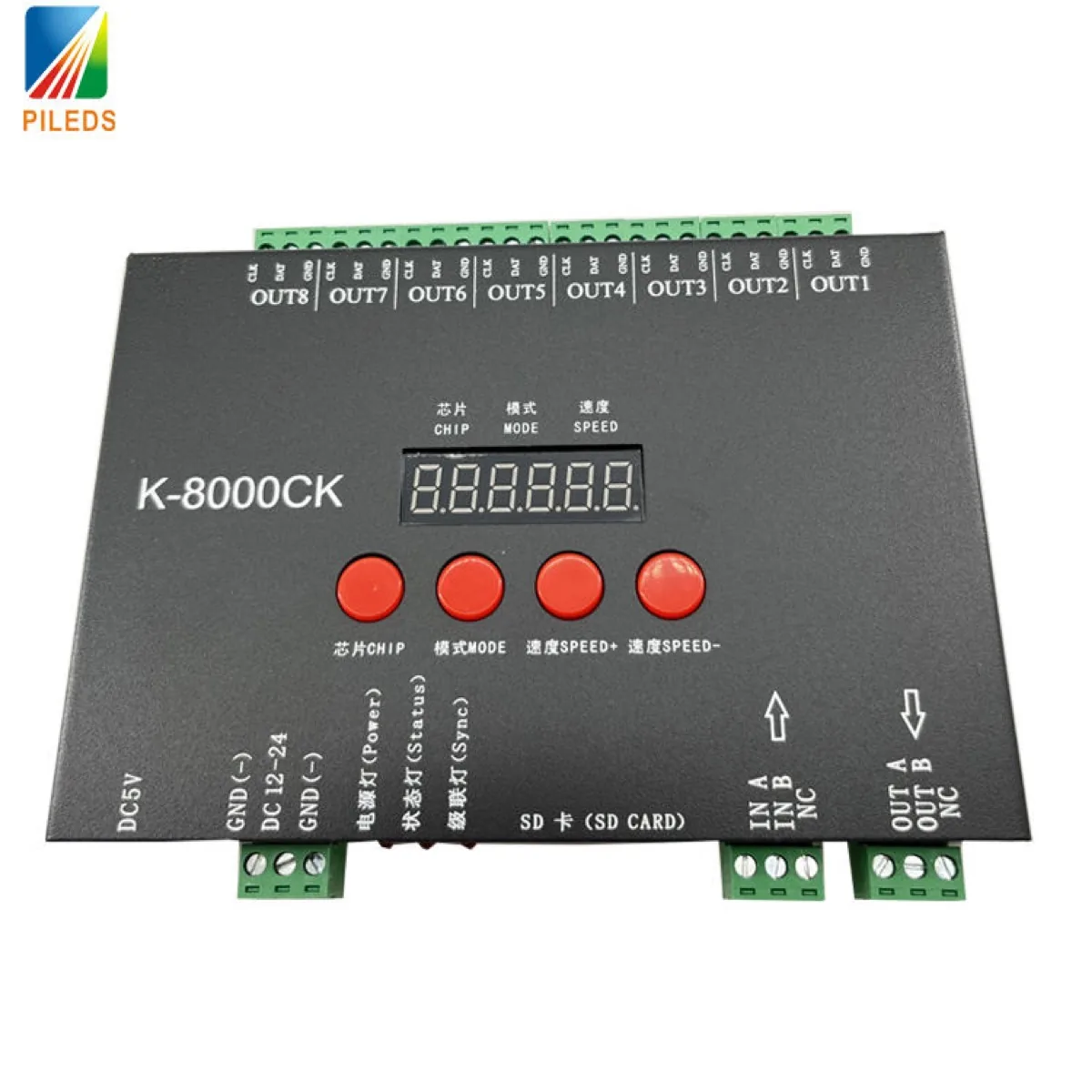
Eight outputs is a port count, not a capacity figure. Each output has its own pixel limit, and that limit depends on the protocol the controller speaks and the frame rate the effect needs — which is why the controller model belongs in the brief rather than in a separate purchase order.
Color matches on the sample and drifts across batches. The sample was built from one LED reel; production is built from several. Without binning discipline and a retained golden sample, "same as approved" becomes a matter of memory. This is a common reason a second shipment gets rejected, and it is prevented by process, not by promise.
The IP rating survives the factory and not the installation. An IP67 fixture with a correctly potted body and an incorrectly sealed field joint is no longer an IP67 installation: a failed joint can take it several IP levels down, and only a test on the finished assembly says where it landed. The rating belongs to the enclosure as tested; every cut, every re-termination and every cable exit is a new sealing problem. Ask how the joint is sealed and what the factory supplies to seal it, not just what the number is.
Voltage drop appears at the end of the run. Long runs at low voltage lose brightness and shift color before they fail. Higher-voltage strip and planned power injection solve it; discovering it during commissioning does not.
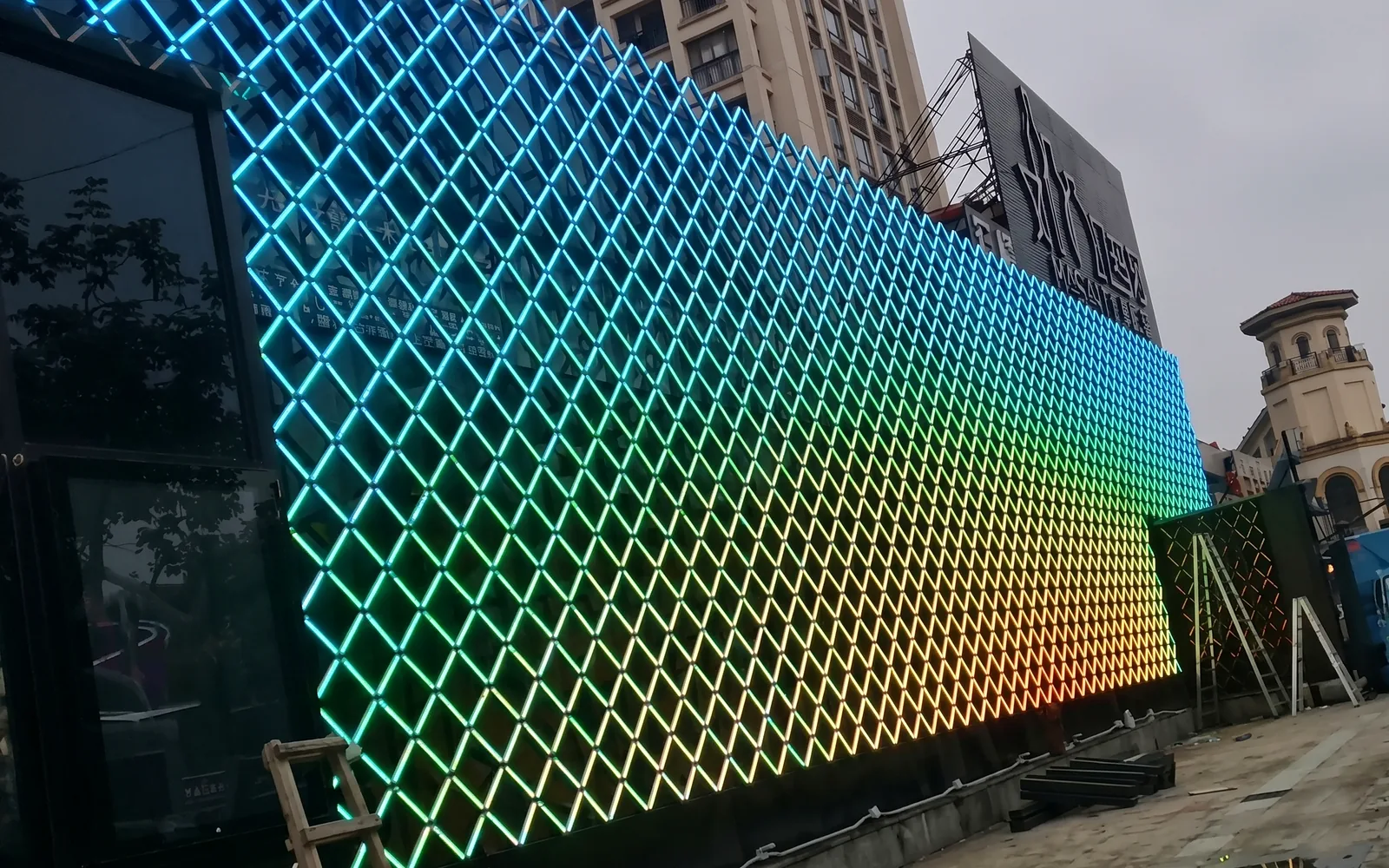
None of these are exotic. They are the ordinary consequences of treating a fixture as a part number instead of a system, and each one is cheap to prevent at the brief stage and expensive to fix at the handover stage.
Auditing "We Are a Factory"
It is a rare pixel LED OEM supplier in this market that does not describe itself as a manufacturer, and the phrase costs nothing to type. Company registration, floor capacity, certificates and sample testing are checks you should run on any supplier, and they are not what this section is about. The OEM question is narrower and harder to bluff: can this factory hold your specification across batches, across years, and across the staff turnover in between?
Ask for the process list, not the capability list. Die attach or LED placement, SMT, reflow, encapsulation or potting, assembly, aging, and final test. Many factories outsource the PCB itself, which is normal and not a red flag. It becomes a red flag when the answer to every step is "our partner does that", because at that point you are buying from a project manager with a logo. Watch it happen once, too: a scheduled call with the line running for a current order costs a real plant ten minutes and a trading office an excuse.
Then map your specification onto those steps. Which stations create a parameter you wrote — the driver IC, the LED bin, the potting compound, the color point measured per batch — and is each of them locked to a written process route or to one operator's habit? A supplier running a genuine OEM program can name the step that produces each of your acceptance criteria and the step that measures it before packing.
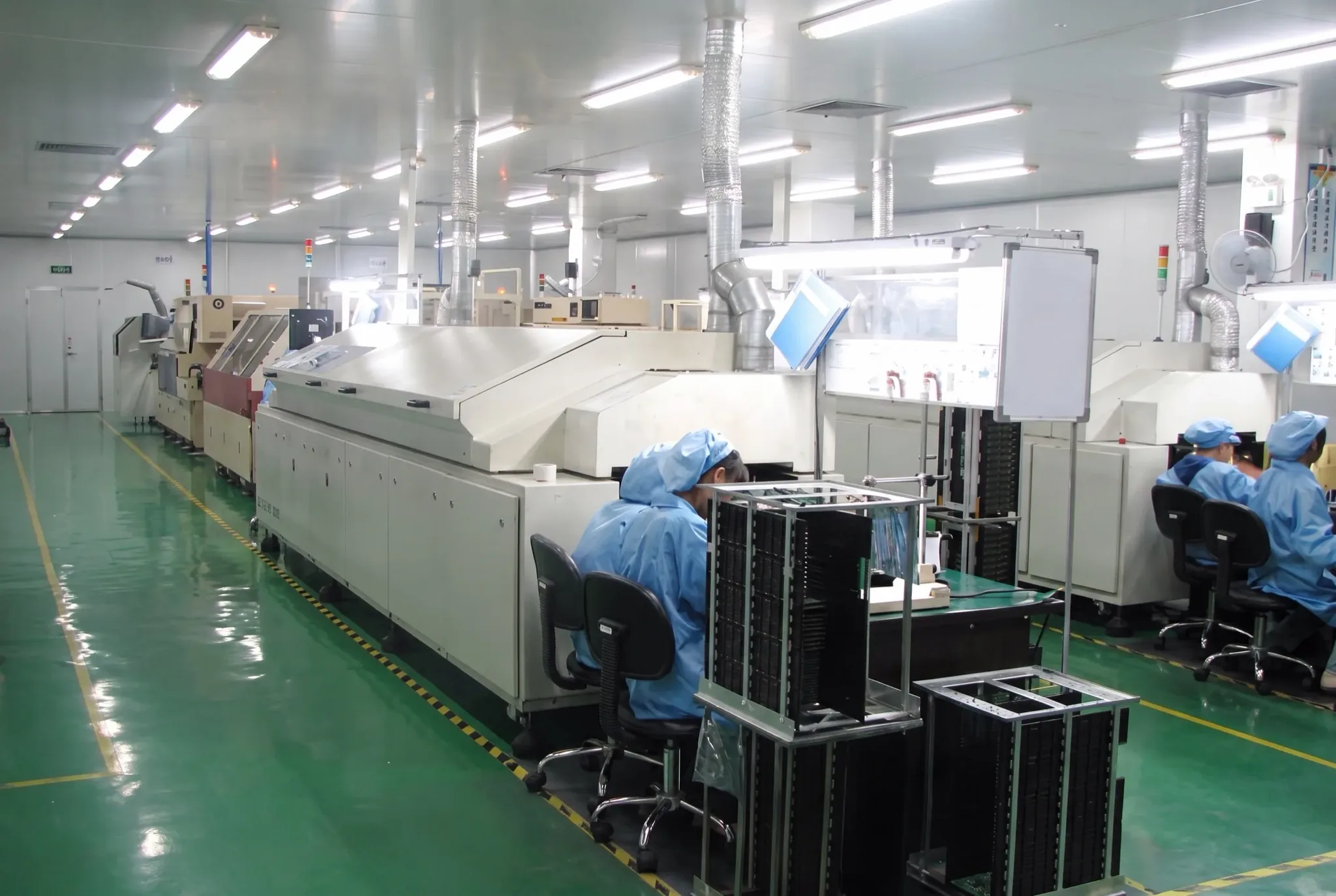
The question that separates an OEM supplier from a merely competent one is what happens when something changes: a component goes end-of-life, a bin runs short, a PCB revision becomes cheaper. Ask for the last three change notices on a comparable program — what changed, why, who approved it, and whether the buyer heard before or after the shipment. A factory that treats substitution as an internal engineering decision can pass a general audit and still ship a product your specification no longer describes.
The pattern to watch for is a supplier whose documents and whose answers disagree. A datasheet that shows a plant the sales engineer has never stood in, a sample that ships from a different city than the claimed factory, a certificate that names a model nobody can quote. None of these prove fraud on their own. Together they tell you how much of the relationship is real.
For the wider version of this exercise — company checks, capacity, certificates, sample testing and the questions that separate a factory from a reseller — see how to vet a China LED supplier. Everything above is the part that page does not cover: not whether the factory is real, but whether it can hold one buyer's specification once the order repeats.
What a Certificate Covers — and What It Doesn't
Certification is where buyers most often accept a logo in place of a scope. Three documents carry most of the weight in this category, and each one means something narrower than the badge suggests.
CE marking is the manufacturer's own declaration. Under EU rules the manufacturer carries out the conformity assessment, assembles the technical file, issues the EU declaration of conformity and affixes the mark; the European Commission's CE marking guidance is explicit that the mark does not mean a product has been approved as safe by the EU or any other authority. So "CE certified" is a statement about a file and a declaration, and the useful question is which directive the declaration cites and whether the test reports behind it name your model.
RoHS restricts the use of hazardous substances in electrical and electronic equipment. The EU RoHS directive currently restricts ten substances — lead, cadmium, mercury, hexavalent chromium, PBB, PBDE, DEHP, BBP, DBP and DIBP — and applies to products with an electrical or electronic component unless specifically excluded. A RoHS statement is about materials, not about performance or safety, and it should be backed by a test report that lists the parts tested.
IP ratings come from IEC 60529, the ingress protection standard. The number describes how the enclosure behaved under defined test conditions for dust and water. It says nothing about UV aging, salt spray, thermal cycling or how the fixture behaves after a field joint. Those are separate tests, and a supplier claiming outdoor suitability on the strength of an IP number alone has told you one sixth of the story.
What to ask for, in one list: the report number and issuing laboratory, the date, the exact model or model family covered, and the directive or standard cited. Then compare that model list against the part number you are buying. A certificate for a different housing, a different driver or a different LED package is not a certificate for your product, and this mismatch is common enough that checking it is routine rather than adversarial. The mechanics of checking a certificate number against the issuing body are covered in how to verify an LED certificate number for procurement.
One more thing, because a US or Canadian buyer will ask within the first two emails: CE and RoHS are not safety listings. A UL or ETL listing is a different process, performed by a recognized testing laboratory, and a manufacturer either holds one for a model family or does not. We have written about why we do not hold a UL listing rather than leave the question to be discovered later; if your program requires a listing, that requirement belongs in the first brief, because it changes which factory can build the product at all.
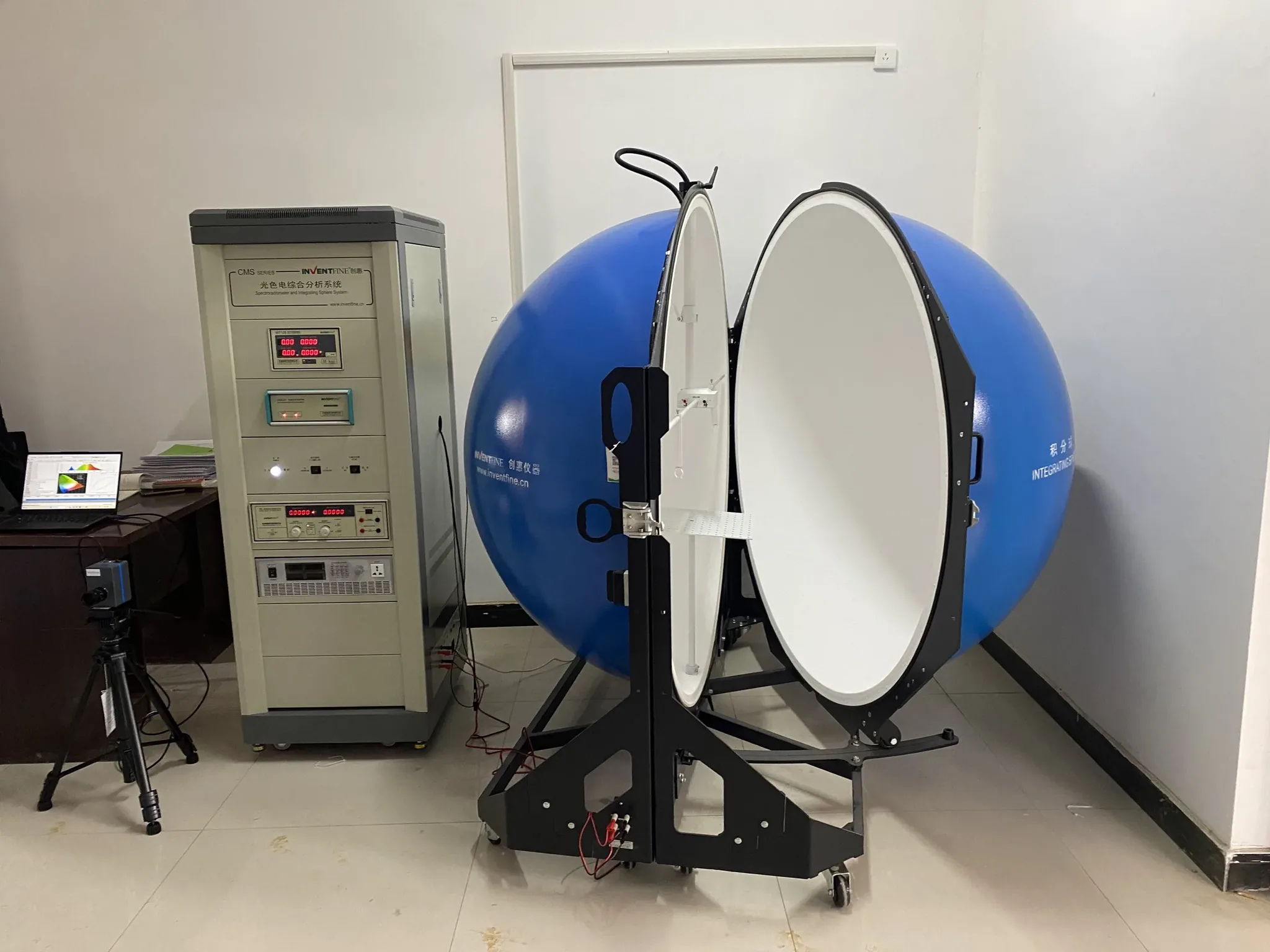
The measurement equipment matters more than the certificate for one practical reason: batch-to-batch color is controlled by measurement, not by paperwork. Ask what is measured, on what instrument, and how often.
From Brief to Repeat Order: Running an LED Pixel OEM Program
A pixel OEM program that goes well has a recognizable shape, and the shape is the same whether you are ordering bars, tubes, points or strip. What varies is how long each stage takes, which depends on tooling, component lead times and how complete your brief was — so treat the sequence as the contract and the calendar as a negotiation.
Specification freeze. The brief becomes a document with a revision number, including the fields from the table above and the acceptance criteria for color and function. Anything not frozen here becomes a change later.
Sample. One or more units built to the frozen specification. Approve them against the criteria, not against how they look in a photograph.
Golden sample and approval. The approved unit is retained by both sides and becomes the reference for every future batch. This is the most valuable object in the whole program and it is frequently the one nobody keeps.
Pilot run. A small production run to expose process issues that a hand-built sample hides: panelization, connector assembly time, packing, yield.
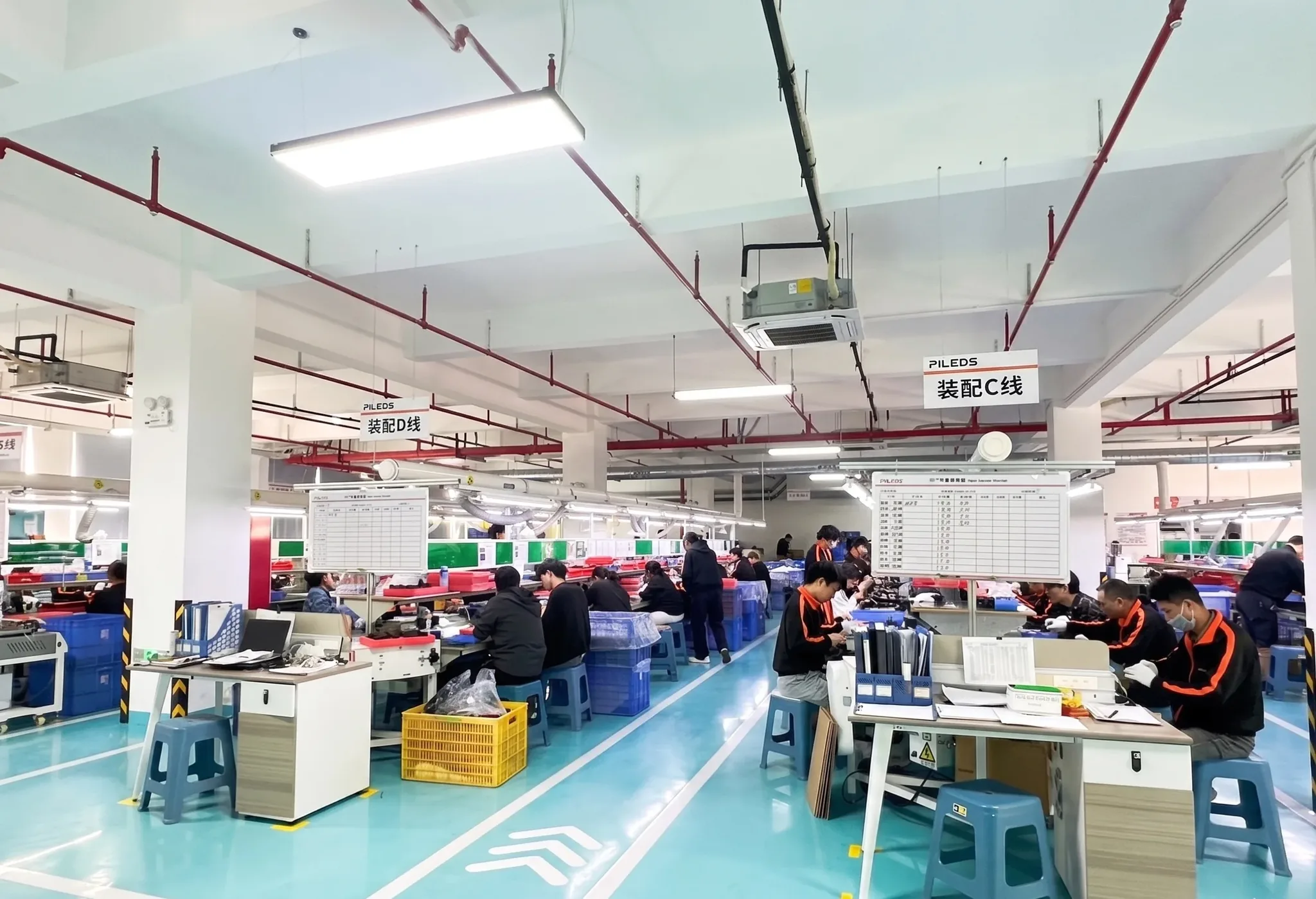
The pilot is where a specification meets a line: connector assembly time, packing, yield, and whether the process holds once it moves off the bench.
Production and repeat. With the process stable, repeat orders are about change control rather than engineering: notice of a substitution should arrive before the shipment does.
The commercial terms sit alongside this sequence, not inside it: MOQ bands, price breaks, payment terms and sample policy are a separate negotiation, covered in the guide to pixel LED distributor terms. What matters for this article is that a terms sheet agreed before the specification is frozen will be renegotiated anyway, because the specification is what the terms were priced against.
Quick Answers on LED Pixel OEM
Is LED pixel OEM the same as ODM?
No. In OEM the buyer owns the design and the factory builds to it; in ODM the factory owns the design and the buyer brands it, sometimes with modifications. The practical test is who can sell the same design to someone else.
Do I need my own drawing to order OEM?
Not necessarily a CAD file. A written specification plus a reference sample can define an OEM build, provided the acceptance criteria are documented and both sides sign the same revision. What you cannot do is define it verbally and expect the same product in six months.
Can the factory put my brand on the product and packaging?
Yes, in all three models — which is exactly why branding is not a reliable signal of an OEM relationship. Ask about the silkscreen, the label, the carton and the manual separately, and confirm who owns the artwork.
Who owns the tooling?
Whoever the contract says, and whoever paid. If the mold was amortized into your unit price, you have paid for it; whether you can take it is a separate sentence that should be written down.
How do I verify the factory is real?
Ask which process steps happen on premises, request a scheduled video call on the line, and compare the certificate model list against the part number you are ordering. A plant will answer all three; a reseller will answer the first two with adjectives.
What do I need before requesting a quote?
Fixture form, IC family if known, LEDs per meter and pixels per meter, voltage, color configuration, protocol and controller, IP requirement, PCB width, cable and connector, lengths and quantities. One email with those fields, and the quote that comes back will be comparable to the next one.
The First Thing to Write Down
Before the next supplier call, write the sentence you want the relationship to be true of: we own the drawing, we own the tooling, nobody else gets this product, and changes come to us in writing first. If a supplier can sign that, you are buying OEM. If they cannot, you are buying a branded catalog item with a longer lead time, and it is better to know that on day one than at the second shipment.
Pileds builds pixel fixtures and the controllers that drive them to order — bars, tubes, points, strip and neon, with the IC, voltage, IP rating and protocol specified per program. The shop-floor answer, if you want to audit us against this article, is a six-checkpoint process in a plant we own in Shenzhen: incoming checks on every LED, IC and PCB batch, automated optical inspection during SMT and reflow, an integrating-sphere measurement of color and lumen output per batch, burn-in, an IP test and a pre-ship function test. If you are weighing a first program, the contact page is the shortest route to a sales engineer who can read a specification rather than a catalog number.
Specifying pixel LED for a real project?
Send the spec — pitch, IC, IP class, run length, voltage — and you get an engineer's answer, not a catalogue. Samples and OEM/ODM quotes from the Shenzhen factory floor.