
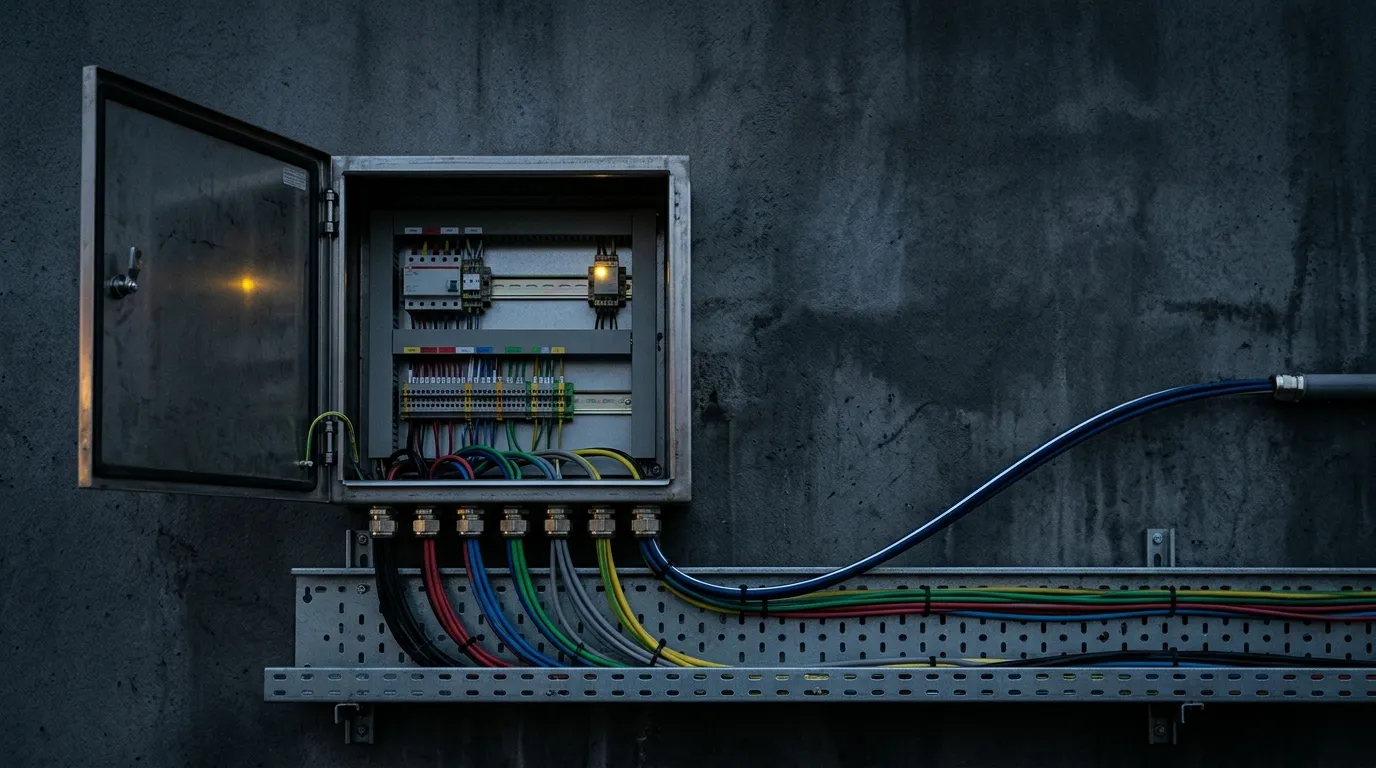
Power Zoning for Pixel LED Systems
Zoning decides where a pixel installation fails. How to split a run into protected power zones, size each feed, and document them for the next technician.
Buyer guides for what goes around the fixture — power supplies, aluminium profiles, connectors and wiring — so a pixel install actually works.
Zoning decides where a pixel installation fails. How to split a run into protected power zones, size each feed, and document them for the next technician.
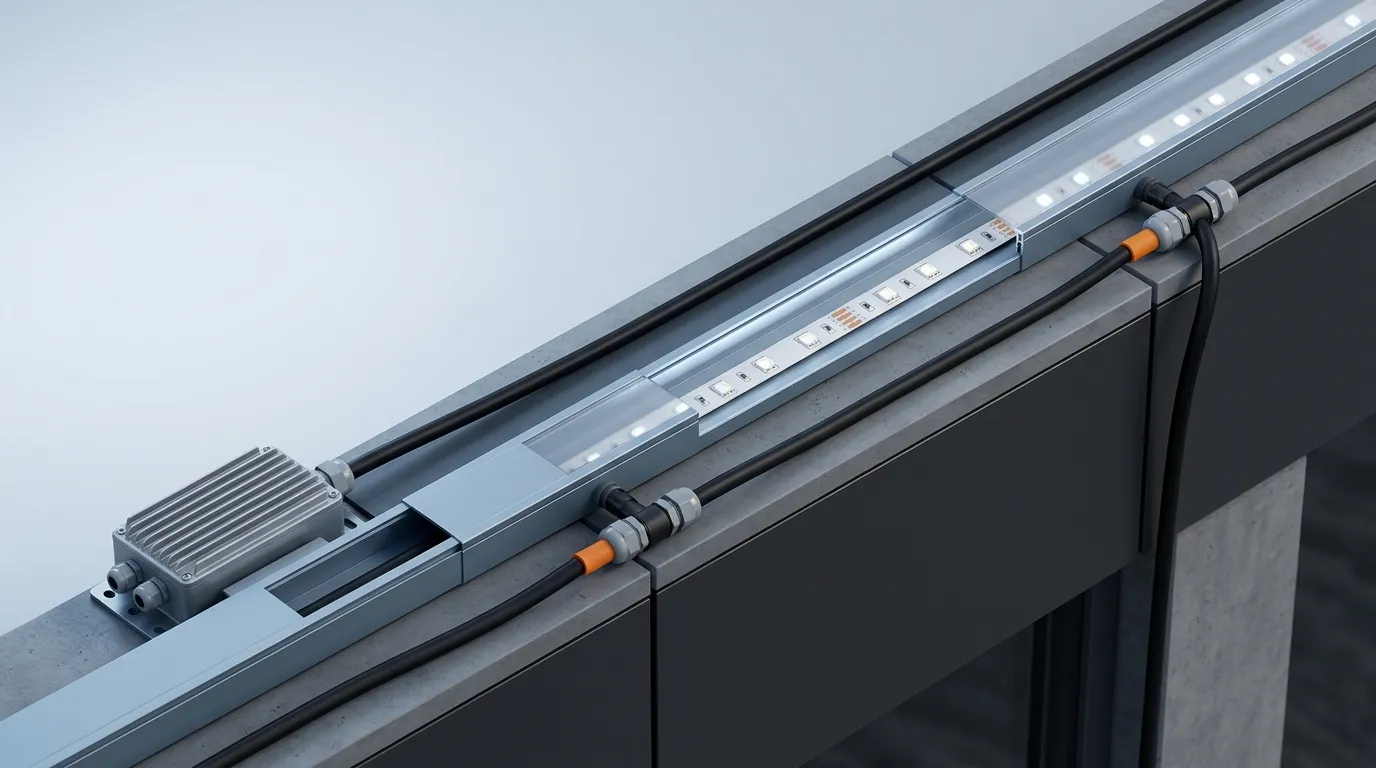
Powering a DC48V long-run pixel strip: what to lock down before you commit — current per meter, injection order, data limits, the 48 V boundary, site tests.
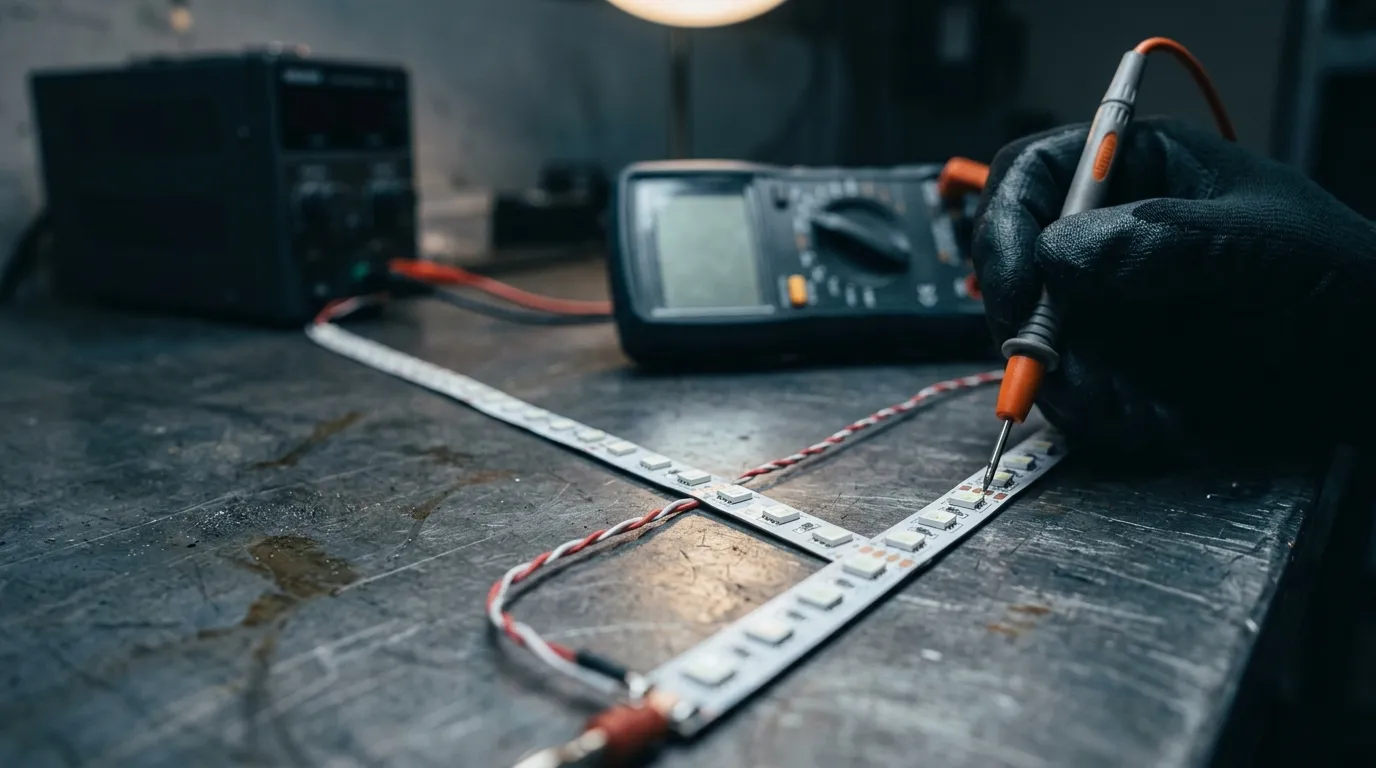
Bright at the controller, dim at the far end? Probe the run in this order. Four readings, four causes ruled out: wire loss, supply sag, data fault, bad joint.
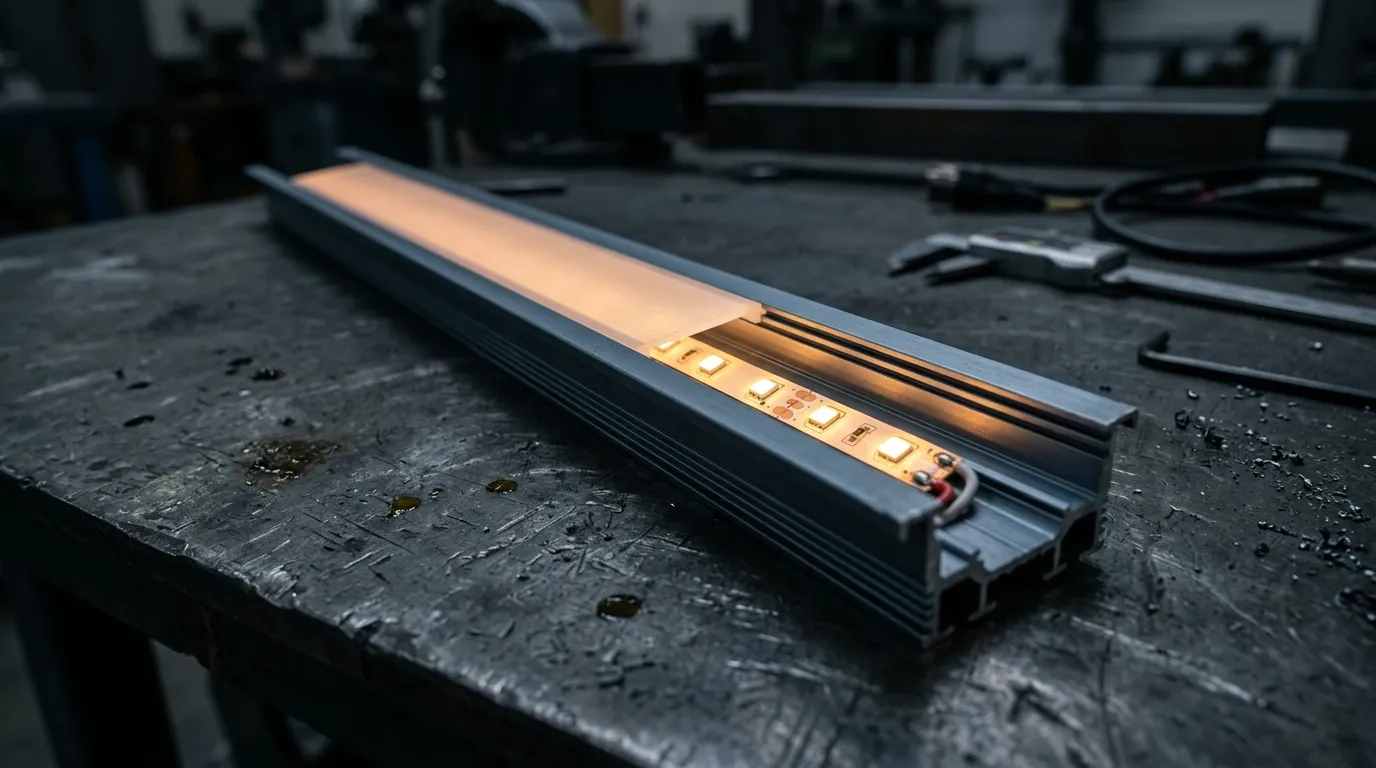
Most LED aluminum profiles do not fail on looks; they block light. Here is how cover, depth and strip fit decide how much of your strip's output you keep.
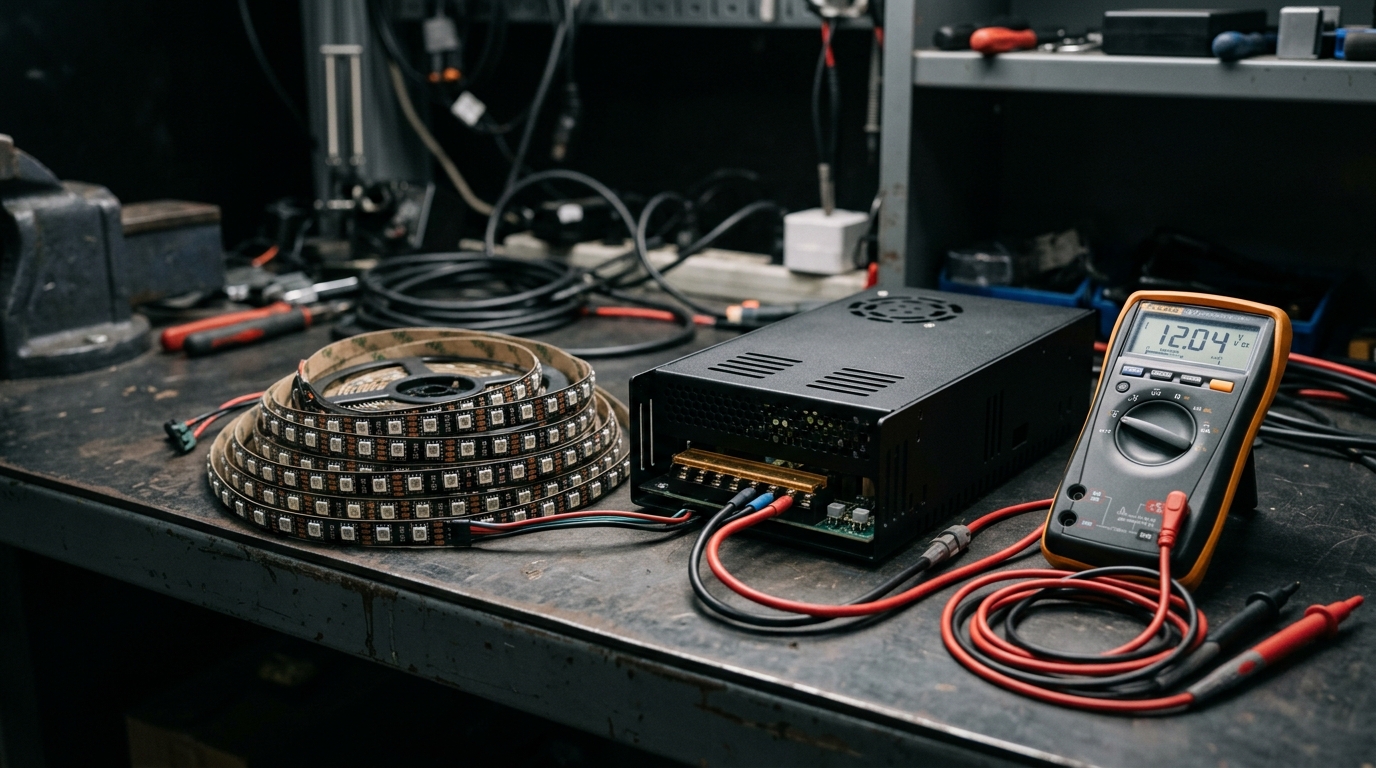
Size the power supply for a pixel LED strip like an engineer: watts per meter, per-pixel current, voltage drop, power injection, and the 20–30% safety margin.
Send the spec — pitch, IC, IP class, run length, voltage — and you get an engineer's answer, not a catalogue. Samples and OEM/ODM quotes from the Shenzhen factory floor.