
Architectural LED Lighting vs Decorative Strip
Architectural LED lighting is a system you specify; a decorative LED strip is a reel you buy. The eight questions that decide whether a line survives a facade.
Every facade package arrives with the same two words in the bill of quantities: LED strip. On a building those two words cover two products that share a shape and almost nothing else — a decorative reel sold in five-meter boxes, and an architectural system that is specified, tested, batched and serviced.
The confusion is expensive in one direction only. Most of what the market sells as architectural LED lighting is one of these two products wearing the other's label. A decorative reel that ends up on an elevation does not fail at handover; it fails in the second winter, or at the bay where two reels met, or on the morning the client photographs the building and finds a color step on floor nine. By then the line is behind a sealed reveal forty meters up.
This page draws the line between the two classes and gives you the eight questions that separate them on a datasheet, before anything is ordered. If you are still at the design stage — grazing versus wall washing versus a media elevation — the facade and curtain wall lighting guide covers the layer above this one. This page starts where the design decision has been made and the product class has not.
One noun, two products
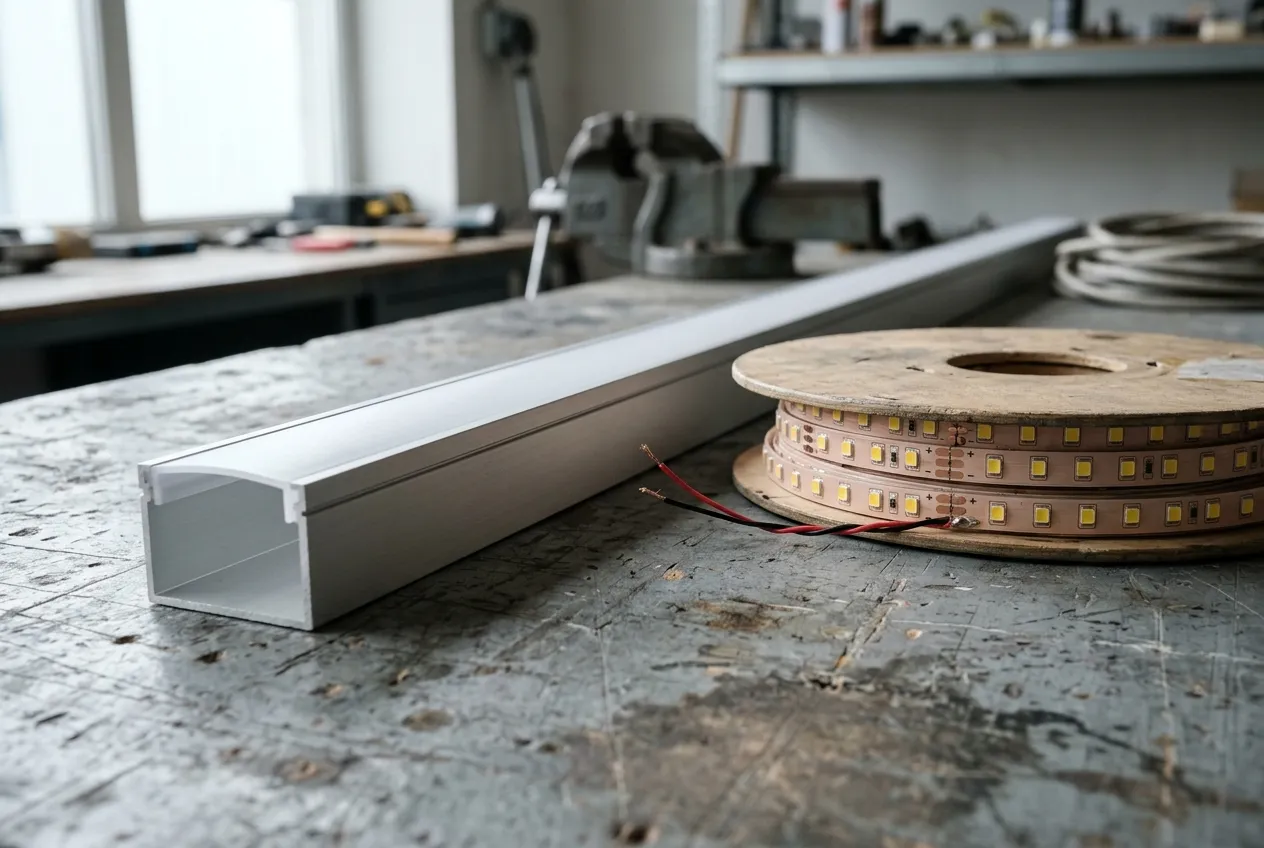
A decorative LED strip is a finished consumer good. It is a flexible circuit board with surface-mount packages on it, an adhesive backing, and either an integrated driver or a plug-in one, wound on a reel and sold by the meter. Its performance statement is a single line on the box: 14.4 W/m, 12 V, RGB. Nothing on that label is a project variable, and nothing on it is tested to a standard you can cite in a submittal.
An architectural LED strip is a component of a luminaire. Underneath it is often the same kind of board. What you actually buy is a system: the strip plus the extrusion that carries it, the diffuser that shapes the output, the driver, the control interface and the mounting detail — delivered with a photometric file, an ingress test report, a color-bin statement and a plan for replacing a failed section.
Neither product is a fake, and neither is uniformly better. They are built to different briefs. The decorative brief is look right in a dark room, cost little per meter, ship in a box. The architectural brief is be the same on bay one and bay forty, survive the weather for a stated number of years, and be maintainable without scaffolding.
So the decision is not a taste decision between two brands. It is a question about what the elevation can afford to have go wrong.
What "architectural" actually buys you
The word is used loosely in catalogs, so it helps to translate architectural LED lighting into things you can hold a supplier to. Five of them do most of the work — the eight questions further down are how you test a supplier on them.
1. A color statement, not a color name
"3000K warm white" is a temperature, not a consistency. Two reels of 3000K strip from different production batches can sit on opposite edges of the allowed chromaticity box and still be legitimately called 3000K. On a wall where a viewer sees forty bays side by side, that spread is not a technicality — it is a visible patchwork.
An architectural spec states the spread: the color point, the color rendering index (CRI) with R9 (the deep-red sample that most warm-white LEDs fail first, see color rendering index), and a color consistency tolerance in SDCM — steps on the MacAdam ellipse, the experimentally derived region of color space that a human eye cannot distinguish. Three steps is the usual commercial line for facade work; five is where adjacent panels start to read as different whites.
2. Ingress protection as a construction, not a coating
IP is defined by IEC 60529, and the second digit is not a marketing grade — it is a specific test (IP code): IP65 is jets from a nozzle, IP66 is powerful jets, IP67 is temporary immersion, IP68 is continuous immersion in conditions agreed between buyer and maker. What the digits do not tell you is how the strip got there.
A sealed silicone extrusion, a polyurethane encapsulation and a heat-shrink sleeve with silicone end caps can all be sold as IP67, and they do not age the same way. The IP rating on the box is therefore a starting point, not an answer. Water almost never enters through the face of a strip. It enters at the cut end, at the joint between two sections, at the cable gland, and at the point where a mounting clip has compressed the housing.
3. Lifetime data at the temperature it will actually run at
"50,000 hours" on a decorative reel is usually a claim about the LED die at a laboratory current and a comfortable case temperature. On a building the same die sits inside a closed aluminum reveal, in summer, behind a diffuser that traps heat.
The verifiable version of the claim is a chain: LM-80 test data for the LED package over at least 6,000 hours, a TM-21 projection from that data (which by convention runs no further than six times the tested hours), and a stated case temperature for the projection. Ask what lumen maintenance figure is being quoted — L70 or L80 — and at what temperature.
4. Optical control
A strip on its own is a bare source. Architectural systems treat the diffuser as part of the luminaire: its depth sets whether the emitters read as a line or as a row of dots, its transmission sets the efficiency you actually get, and its setback from the face sets the glare. The order matters more than the components: decide the distribution the elevation needs — a continuous line, a wash, a cut-off — and then choose the profile, diffuser and setback that produce it. A bare reel cannot make that promise, because the diffuser is not in the sale.
5. Serviceability and traceability
The last two are the ones procurement notices after the first failure. An architectural line has a defined replacement unit (a section, a connector, a module), an accessible joint, and a batch or lot code on the reel that matches the elevation drawing. A decorative reel has a scissors mark and an adhesive backing.
What the label says | What a decorative reel means | What an architectural system must state |
|---|---|---|
"14.4 W/m" | Nominal, at nominal voltage, no photometry | W/m and lm/m at a stated drive current, from an LM-79 test |
"3000K" | A temperature inside a wide bin | CCT, Ra and R9, SDCM ≤3, one batch per elevation |
"IP65" | A rating on the box | Rating plus test report plus sealing method at ends and joints |
"50,000 hours" | Die life at lab conditions | LM-80 hours, TM-21 projection, L70/L80, case temperature |
"Dimmable" | Usually PWM on the tape | Driver and control interface (DMX512, SPI, 0–10 V, DALI) named |
"Cut here" | A scissors line | Connector system, replaceable section length, spare ratio |
Where a decorative reel fails on a building
These are not hypothetical. They are the four ways a decorative LED strip for facades stops looking fine on an elevation — plus a fifth that is not the product's fault.
Color steps between reels. The installer finishes reel one at bay six and starts reel two at bay seven. If the two reels came from different bins, the join is visible from the street and no amount of dimming hides it. The fix is procedural before it is technical: order one elevation as one production batch, and state the elevation lengths at enquiry so the run can be produced together rather than assembled from stock. Our own note on color consistency and binning covers how batches are selected and tested before they leave the factory.
Water at the cut end. A strip cut on site and sealed with silicone sealant will pass a handover inspection and fail in the second winter, because the sealant bonds to the surface rather than to the conductor. Encapsulated construction, potted ends and mechanical glands are manufactured, not applied. If you are choosing between ratings, IP67 versus IP68 is the difference between a hosed-down or coastal run and one that takes standing water.
Heat in a closed reveal. Adhesive-backed tape in an aluminum profile with a clipped diffuser has almost no thermal path. Case temperature climbs, output falls faster than the datasheet curve, and the color shifts as the phosphor and the driver age at different rates. The profile choice is therefore a thermal decision as much as an optical one — mass and surface area are doing work.
Service that requires a lift. A failed meter in a 700-meter elevation is a maintenance event, not a warranty argument. If the only way to replace it is to cut and re-solder at height, the operator will defer it, and the elevation will carry a dark section for a season.
The fifth failure is not about the product at all: glare. A bare strip at eye level in a colonnade is a row of points, and the DarkSky lighting principles put it plainly — light should go where it is needed, at no more intensity than needed. A diffused, recessed, correctly aimed line is the only version of that idea a strip can deliver.
The eight-question qualification test
Run this against any supplier before the sample is approved. Each question has an answer that ends the conversation and an answer that lets it continue.
# | Question | Decorative answer | Architectural answer |
|---|---|---|---|
1 | What is the color tolerance across the order? | "Same 3000K" | SDCM ≤3, one bin, batch code on every reel |
2 | How is the strip sealed at a cut end? | "IP65, sealed" | Encapsulated body, potted end, glanded entry, test report |
3 | What happens to output at 60 °C case? | Silence, or a 25 °C figure | Derated lm/m and a stated L70 at the project temperature |
4 | Can I have the photometric file? | No file | IES/LDT file for the strip in its profile and diffuser |
5 | What is the diffuser doing? | Nothing, it is optional | Type, depth, transmission, and the dot-free clearance it buys |
6 | What is the replacement unit? | "Cut and re-solder" | Connectorized section, defined length, accessible joint |
7 | How is it controlled? | "Dimmable" | Named interface: DMX512, Art-Net, SPI, 0–10 V, DALI |
8 | What is the warranty, and against what? | 1–2 years, undefined | 3–5 years, with the conditions (temperature, IP, drive current) written down |
A supplier who can answer four of the eight is selling you a decorative reel with better paperwork. A supplier who can answer all eight, and show the reports, is selling a system.
When the decorative reel is the right answer
None of the above means decorative strip has no place on a building. It is the correct choice when the failure cost is low:
- The line is temporary. A launch, a season, a festival. Design life measured in months does not need a ten-year thermal argument.
- The run is short and fully protected. A soffit at three meters, a recessed indoor cove, a joinery detail. No driving rain, no UV, no access problem.
- Nobody will ever see the source. Concealed cove lighting where the diffuser is the only visible surface can be done economically with a commodity reel — as long as the run is short enough that voltage drop and bin variation do not accumulate.
- It is a mock-up. Sample boards and 1:1 photometric trials are exactly where a cheap reel belongs.
What you should not do is pay architectural money for a reveal that will never be seen, or save decorative money on a line that will be photographed for a decade. The class should follow the exposure and the failure cost, not the budget line it sits under.
Element by element: what the facade is actually asking for
A building is not one surface, and the strip that suits a floor line is not the strip that suits a curved roofline. The table below is the short version of the selection; the spec-level version of IP zoning and pitch is in our facade lighting specification walkthrough.
Facade element | What the light has to do | Class needed | Spec that decides it |
|---|---|---|---|
Floor lines and horizontal reveals | The classic linear LED lighting brief: read as one continuous line, bay after bay | Architectural | SDCM ≤3, one batch, injection at both ends |
Vertical fins and mullions | Hold a straight edge over 30–60 m | Architectural | Straightness of profile, fixing tolerance, thermal mass |
Curved rooflines and canopies | Follow a radius without facets | Architectural (formed) | Minimum bend radius, bend direction, neon flex vs profile |
Media and pixel elevations | Address each segment as content | Architectural (addressable) | Pixel pitch by viewing distance, protocol fixed at design |
Soffits, entrances, colonnades | No glare at eye level, no visible points | Architectural | Diffuser depth, setback, wall wash distance |
Sheltered internal coves | Even indirect wash on a budget | Decorative is defensible | Output and CCT consistency within the run only |
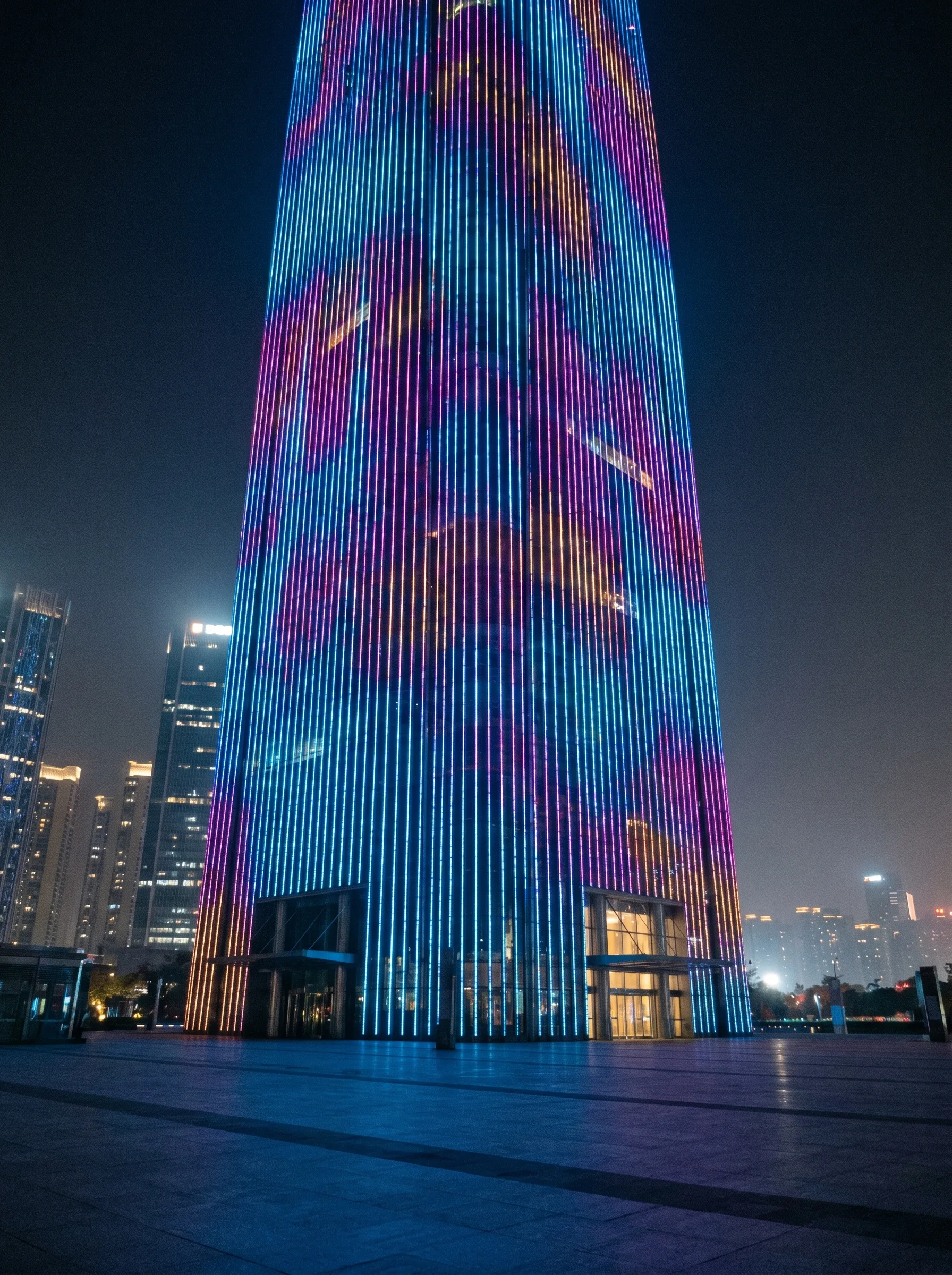
The tower above is color-animated on purpose, and that makes the argument harder to escape rather than easier. Every frame of the animation is still a comparison: the eye reads the whole elevation in one instant, so what has to hold is sameness — one color, one brightness, one geometry across every bay in the same frame, from the plaza to the parapet. A reel that changes bin at bay seven does not show up as a technicality; it shows up as a seam in the middle of a color sweep, where nobody can miss it.
Six numbers to put in the tender
If the specification has to survive a value-engineering pass, it needs numbers rather than adjectives. These six carry the most weight:
- CCT, Ra, R9, SDCM. e.g. 3000K, Ra ≥80, R9 >0, SDCM ≤3. The SDCM figure is what stops a substitution.
- W/m and lm/m at a stated drive current. Not "nominal 14.4 W/m". A number that can be tested.
- Voltage and injection architecture. Constant-voltage 24 V or 48 V, or constant-current; then the power injection interval derived from it. Long runs are a power layout problem on the curtain wall before they are a product problem.
- IP and IK, with the zone they apply to. A facade has four exposure zones and they do not need the same rating.
- Control interface. DMX512, Art-Net, SPI or a switched circuit — chosen at design, because it changes the driver and sometimes the strip.
- Batch rule and spare ratio. One production batch per elevation, plus 5–10% spare meters drawn from the same batch for maintenance.
IP is where tenders most often over- or under-specify, because the whole elevation usually gets one number copied across it. The zone-by-zone target values belong in the facade lighting specification walkthrough linked above, which sets them by exposure. What goes wrong before anyone gets that far is narrower:
What goes wrong | Why it happens | What to write instead |
|---|---|---|
One IP number copied across the whole elevation | The tender template asks for a single grade | Set the grade per exposure zone — sheltered reveal, driven rain, hose-down or coastal, immersion risk — before the schedule is issued |
The grade is bought for the strip body, not the joints | Water enters at cut ends, connectors, glands and compressed clips | Name the connector, the splice method, the end cap and the test report, not just the number |
Impact is forgotten below 2.5 m | Colonnades, entrances and plinths get cleaned, hit and leaned on | Add IK08 where the housing is specified for it, on top of the IP grade for that zone |
A worked figure makes the arithmetic behind items 2 and 3 concrete. A 42 m wide elevation with 18 floor lines is 756 m of strip. At 9.6 W/m that is 7,258 W; split into four zones, roughly 1.8 kW and 8 A per zone at 230 V. Add 8% spare and the order is 817 m — and the spare has to come off the same production run, or it is not spare, it is a second color.
Where PILEDS sits in this
We build both classes, which is why this page does not argue that decorative strip is worthless. The ranges split cleanly: the LED strip and neon strip lines are configurable architectural product — IP20 to IP68 builds, encapsulated or profile-mounted, WS2811/WS2812B/SK6812 or plain white, 12 V to 48 V — and the pixel bar range covers the linear and media-elevation case where each segment is addressed.
What we do not do: retail decorative packs, same-day domestic stock, or UL-listed product — we say so plainly in why we do not hold UL rather than letting a distributor imply it. If the project needs a UL file number, we are the wrong factory and you should know that before the sample stage.
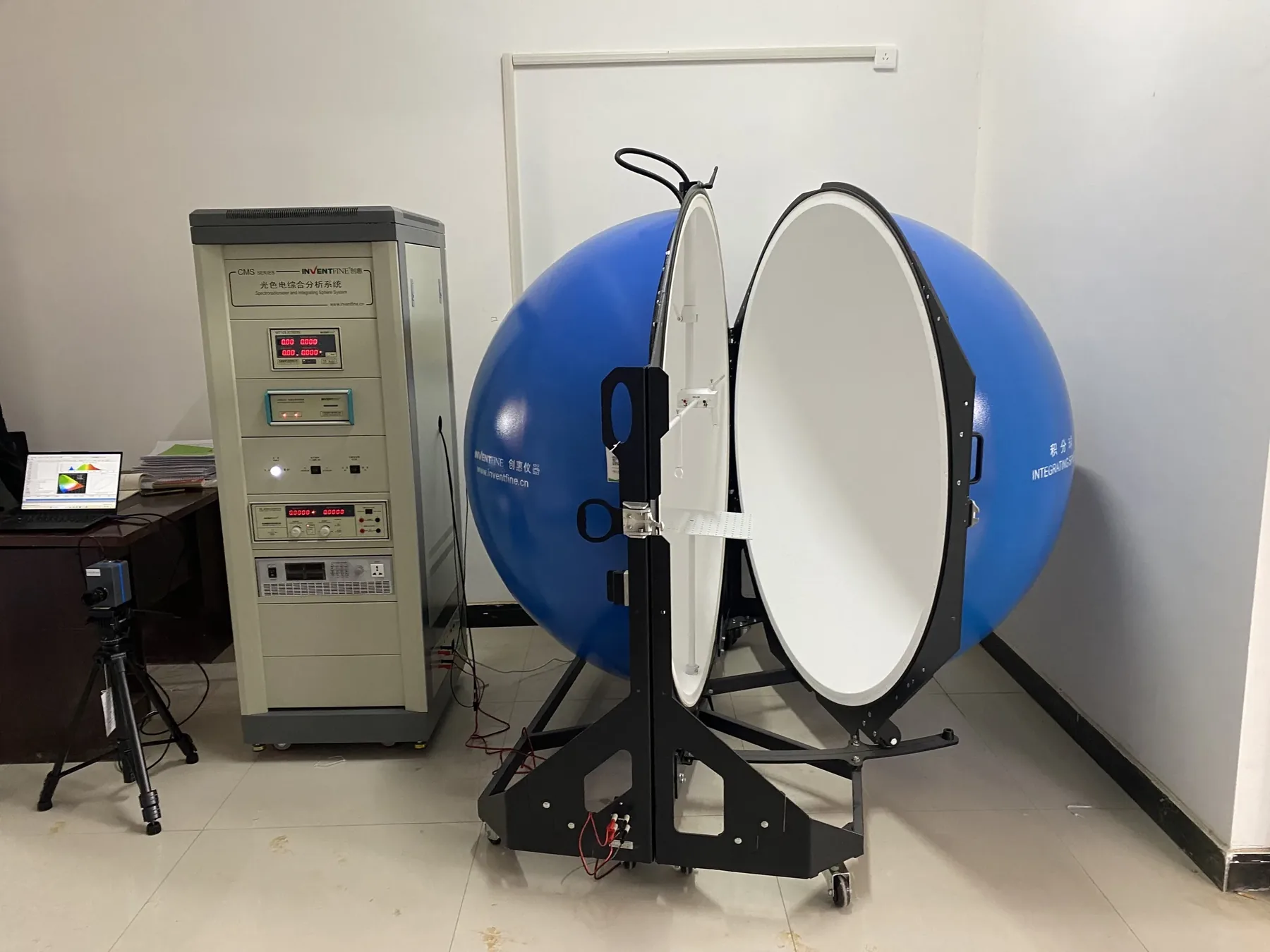
What we can put behind questions 1–3 is process: color is measured on an integrating sphere per production batch, and the measurement is tied to that batch rather than borrowed from a catalog example. That is the difference between a claim and a number you can ask about.
The decision rule
Three sentences, in the order that settles it. They hold for any architectural LED lighting package, from a single floor line to a full media elevation.
If the line will be seen next to itself — bay against bay, floor against floor — it needs a color tolerance and one batch, so it needs the architectural class. If the line will be wet, hot or unreachable, it needs manufactured sealing and a thermal path, so it needs the architectural class. If the line is short, protected and temporary, a decorative reel is the honest choice and the money is better spent on the detail around it.
Everything else is a supplier conversation, and the inquiry form is where a specification becomes a quotation.
Specifying pixel LED for a real project?
Send the spec — pitch, IC, IP class, run length, voltage — and you get an engineer's answer, not a catalogue. Samples and OEM/ODM quotes from the Shenzhen factory floor.